








We will honestly explain why “resting will heal it” does not apply
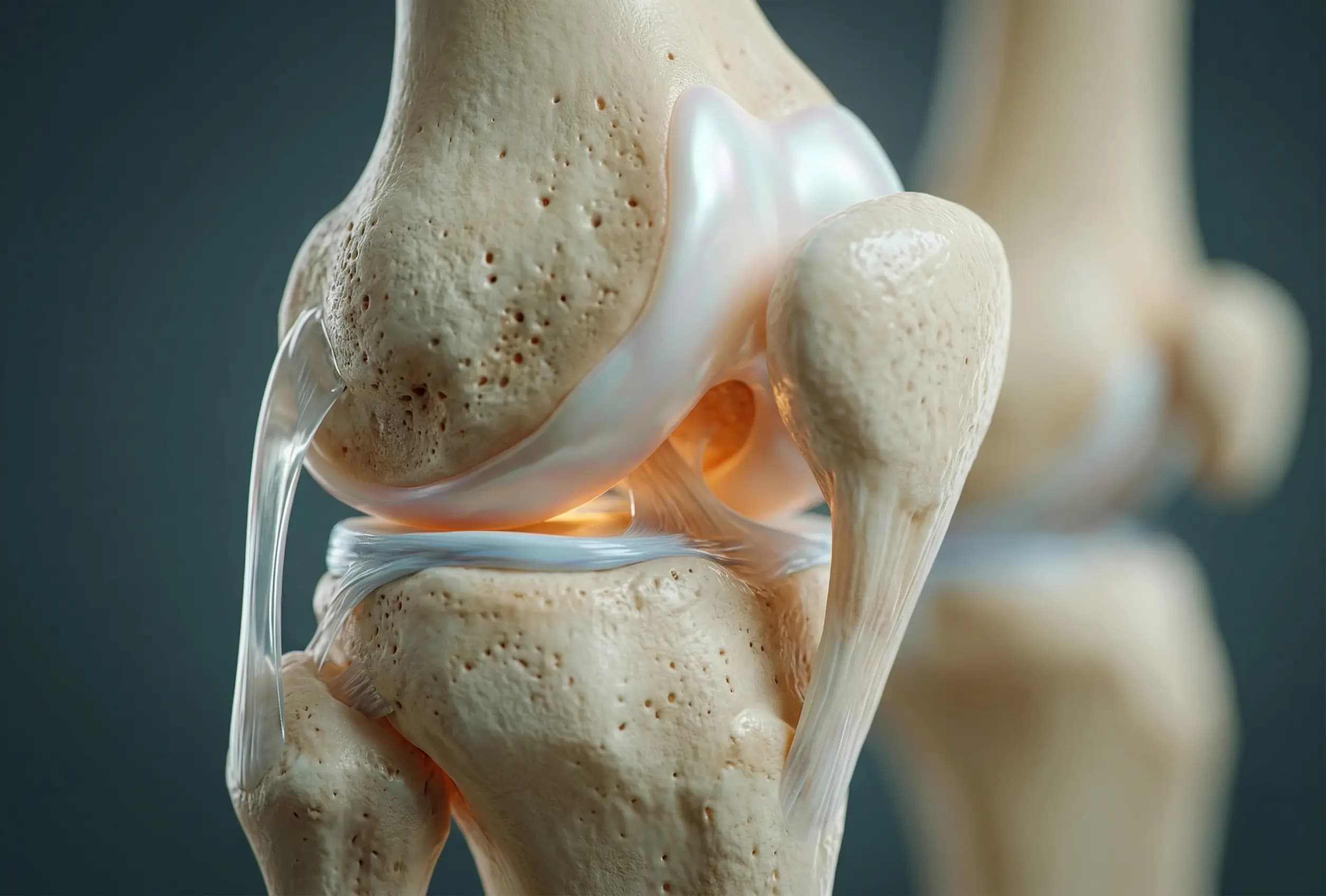
Cartilage is a fundamentally different type of tissue compared to skin or bone. Once damaged, it is extremely difficult to recover through the body’s natural healing ability alone, and the longer it is left untreated, the greater the risk of degeneration progressing.
※ The progression of degeneration and how symptoms appear vary from person to person. Not everyone follows the same course.
When knee pain or joint stiffness persists, many people assume that “it will heal if I just rest.” However, when it comes to cartilage, this expectation is unfortunately often not met.
In this article, we will honestly answer the question: “Why is cartilage unable to repair itself?” There are three main reasons.
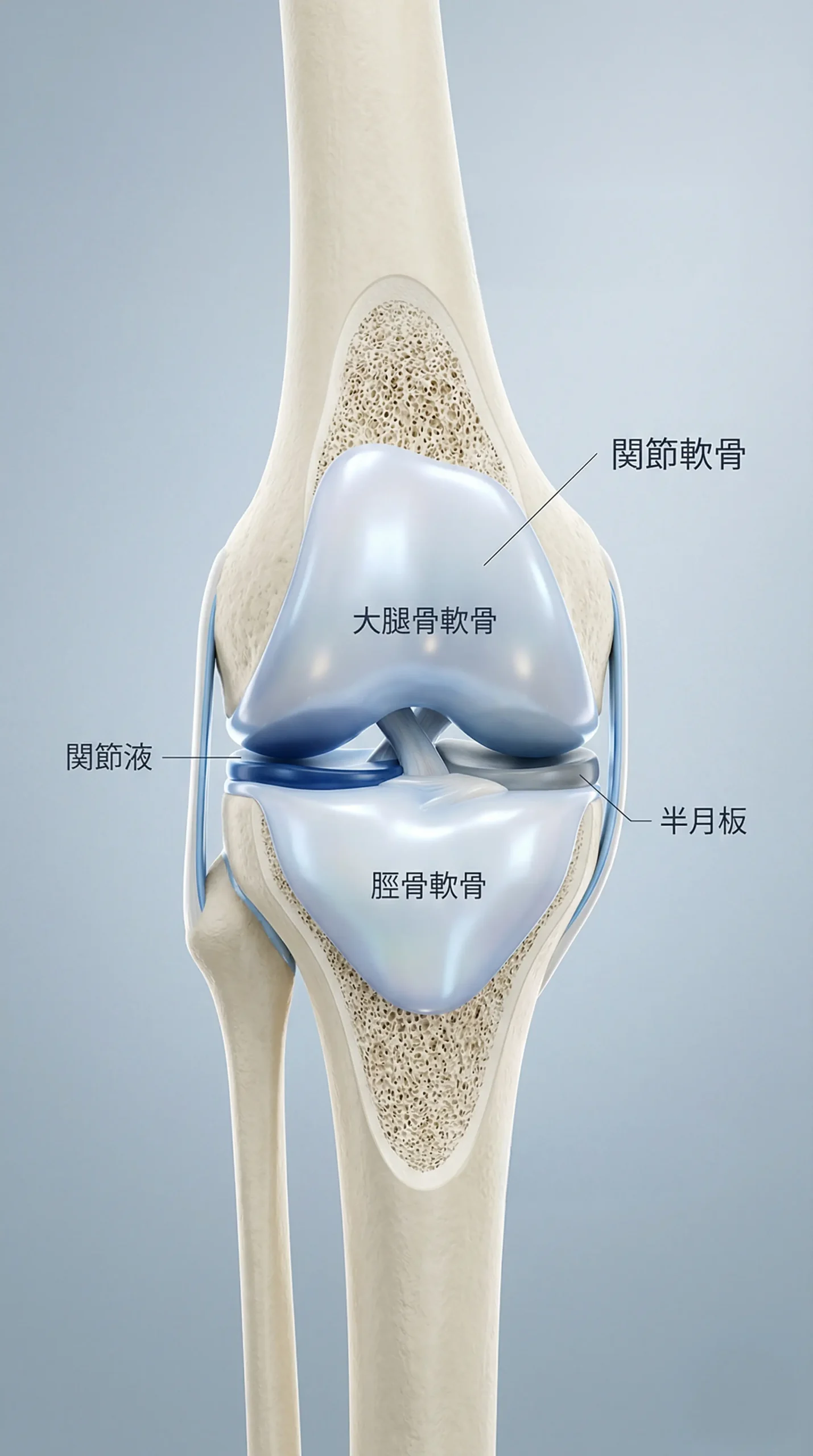
Structure and Function of Articular Cartilage: The “Natural Cushion” That Protects the Knee
Articular cartilage is a thin layer that covers the ends of bones in joints such as the knee, hip, and shoulder. It has a complex structure composed of water, collagen fibers, and proteoglycans, functioning as a “natural cushion” that is both strong and elastic.
It prevents friction between bones, absorbs shock, and distributes body weight across the joint surface. Despite playing these critical roles, it is an extremely fragile tissue in terms of its ability to repair itself.
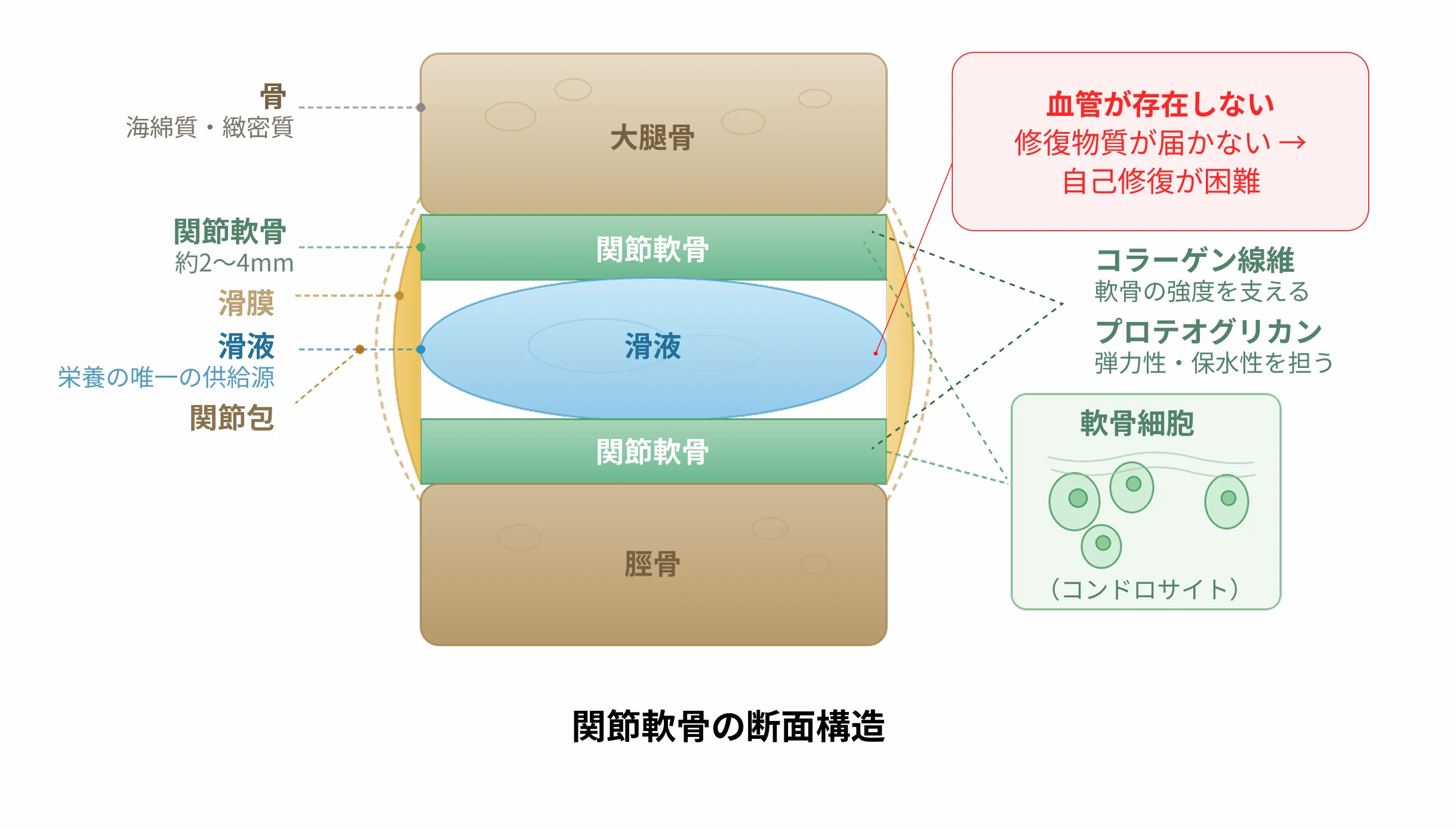
Why Cartilage Does Not Repair Itself: Three Structural Reasons
Even though it is part of the body, why is cartilage so difficult to repair? There are three structural reasons.
No Blood Vessels – No Pathway for Repair
The biggest reason cartilage cannot repair itself is that it lacks blood vessels. Most tissues in the body rely on blood flow to deliver oxygen, nutrients, immune cells, and healing signals to damaged areas. When skin is injured and becomes red and swollen, it is evidence that blood vessels are rapidly transporting repair substances.
However, cartilage does not have this vascular network. Its only source of nutrients is diffusion from the lubricating fluid within the joint, known as synovial fluid. While this is sufficient to maintain normal conditions, it is overwhelmingly inadequate for delivering the large number of repair cells and healing signals required for tissue repair.
Few Chondrocytes with Limited Mobility
The cells responsible for maintaining cartilage, known as “chondrocytes,” have a very slow rate of division and exist in relatively small numbers compared to other cell types. In addition, they have very limited ability to migrate toward damaged areas.
In other tissues, repair cells gather at the site of injury to restore damaged areas. In cartilage, however, this mechanism does not function effectively. As a result, even small injuries can gradually expand if left untreated, sometimes progressing to widespread degeneration before being noticed.
Inflammation Creates a Vicious Cycle Leading to Osteoarthritis
When cartilage is damaged, substances that cause inflammation (such as cytokines and degradative enzymes) accumulate within the joint. These substances further break down cartilage structure and deepen the damage. As the damage worsens, inflammation increases even more—creating a vicious cycle that leads to osteoarthritis.
Osteoarthritis is one of the most common causes of chronic joint pain worldwide. Breaking this cycle at an early stage is considered the most important step in protecting joint health.
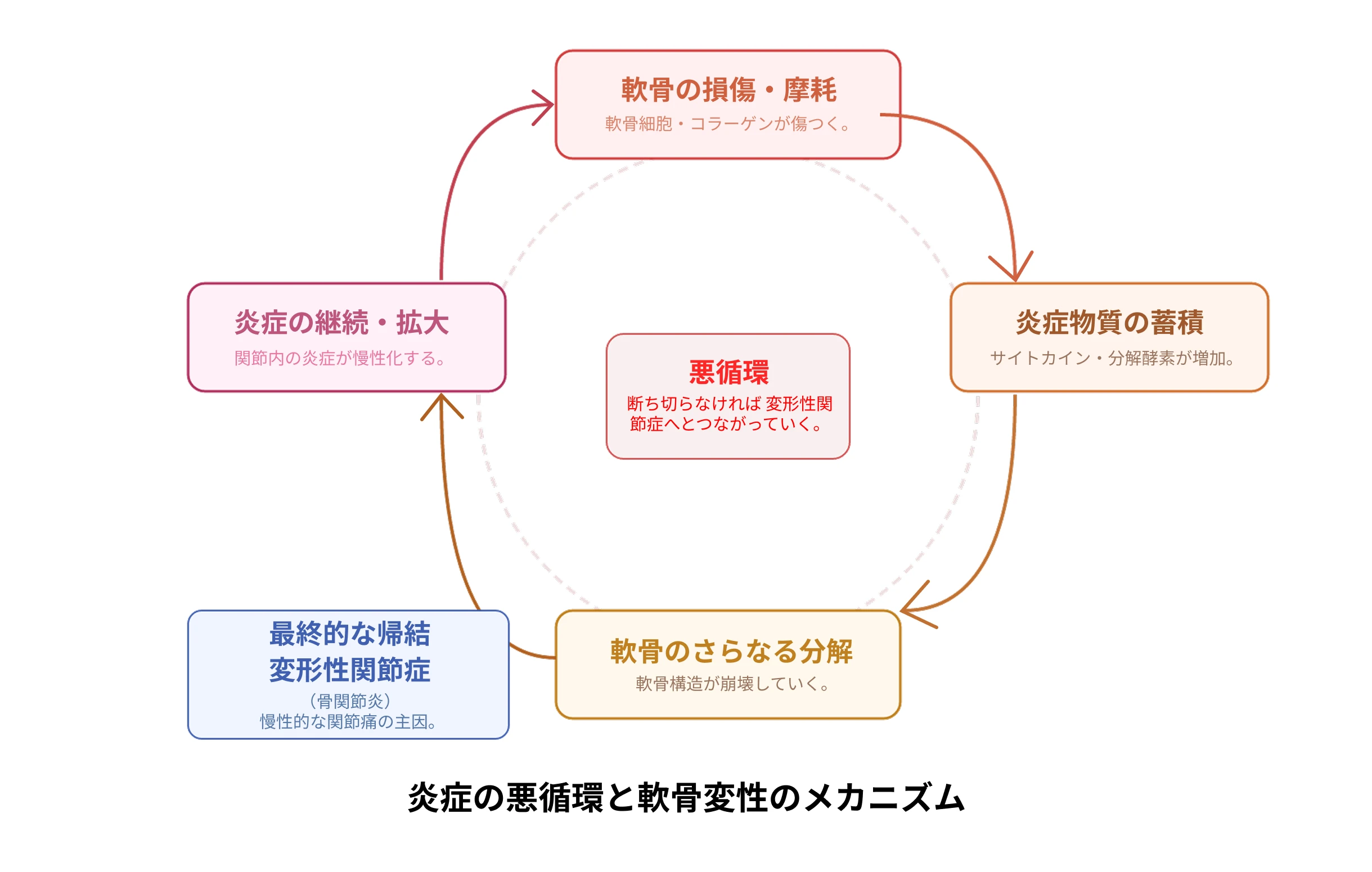
Why Lost Articular Cartilage Is Difficult to Regenerate and Why Early Treatment Matters
Once cartilage is lost over a wide area, restoring its original structure is extremely difficult. The absence of blood supply, the limited number of regenerative cells, the complex structure of cartilage, and the constant mechanical load placed on joints through daily movement—all of these factors combine to hinder recovery.
For this reason, modern orthopedics has shifted its focus from “rebuilding after damage” to prevention and early intervention to “avoid damage in the first place.”
Summary: A Tissue That Doesn’t Heal Just by Waiting
- Cartilage has no blood vessels, making it difficult for substances needed for self-repair to reach it
- Cartilage cells are few in number and have low mobility, so even minor damage tends to accumulate
- The vicious cycle of inflammation accelerates degeneration
- Early intervention is the most reliable way to protect your joints
* This article is intended to provide general medical information and does not guarantee specific treatment outcomes. Symptoms and progression vary among individuals. Please consult a physician for details.
Knee Joint Care at Ginza YR Clinic: Adipose-Derived Stem Cell (ASC) Therapy

We provide adipose-derived stem cell (ASC) therapy for whole-body care and knee joint treatment.
Under the philosophy of “Ageing Well”, we focus not on resisting aging, but on embracing it in a healthy and natural way. Starting from optimizing the body at the cellular level, we offer a comprehensive approach combining regenerative medicine, joint care, and anti-aging treatments to support long-term health and quality of life.
► Learn more about Adipose-Derived Stem Cell (ASC) TherapyMore Information & Consultation Booking
Tel03-6263-9219
References
- Buckwalter JA, Mankin HJ. Articular cartilage: tissue design and chondrocyte-matrix interactions. AAOS Instructional Course Lectures. 1998;47:477-486.
- Huey DJ, Hu JC, Athanasiou KA. Unlike bone, cartilage regeneration remains elusive. Science. 2012;338(6109):917-921.
- Sophia Fox AJ, Bedi A, Rodeo SA. The Basic Science of Articular Cartilage: Structure, Composition, and Function. Sports Health. 2009;1(6):461-468.