









ASC therapy is not a “one-size-fits-all” treatment that solves every symptom at once. However, as an adjunctive therapy that may help regulate the inflammatory environment within the joint, protect remaining tissue, and slow the progression of degeneration, scientific research is steadily advancing.
※ The effects and timing vary by individual, and the same results are not guaranteed for everyone. Outcomes may differ depending on disease type, stage, and overall health condition.
In the previous article, “Three Reasons Why Cartilage Cannot Self-Repair,” we explained why cartilage cannot regenerate on its own: lack of blood vessels, limited repair capacity of chondrocytes, and a vicious cycle caused by inflammation.
So how does modern medicine approach this issue? In recent years, regenerative medicine using “adipose-derived stem cells (ASC)” has gained global attention. Unlike surgery, it places less physical burden on the body, and it differs from conventional drug treatments. Why is this approach considered effective for joints, and how is it positioned in Japan? We will explain step by step.
What Are Adipose-Derived Stem Cells (ASC)? | The Repair-Supporting Power of Your Own Fat
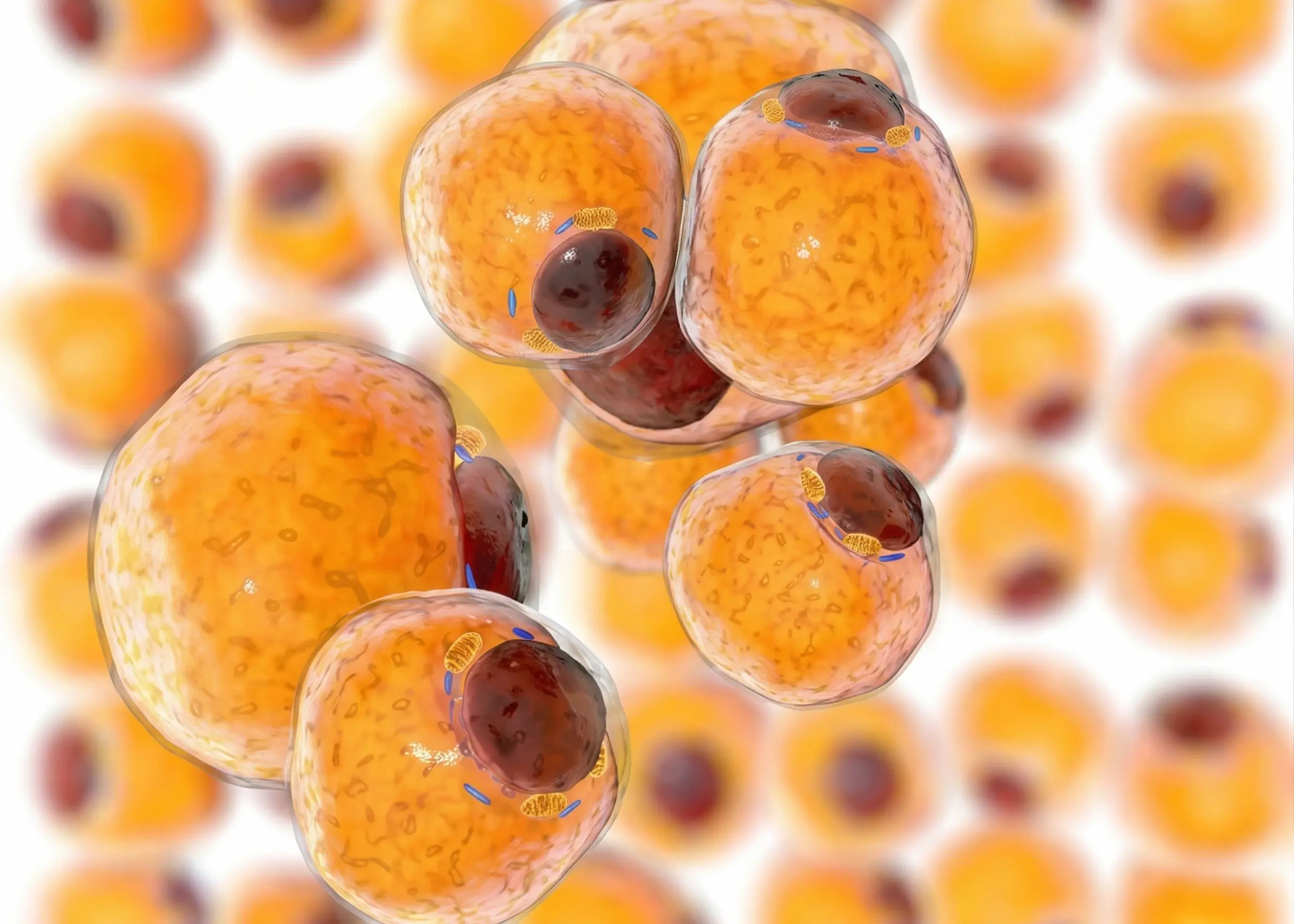
ASC (adipose-derived stem cells) are a type of stem cell found in fat tissue such as subcutaneous fat. They are “special cells extracted from your own fat that can differentiate into various types of cells.”
They can be harvested from a small amount of fat from the abdomen or thighs, with less burden compared to bone marrow extraction. Because they are derived from the patient’s own cells, the risk of immune rejection is considered low.
Four Mechanisms of ASC in the Knee Joint | From Inflammation Control to Cartilage Protection
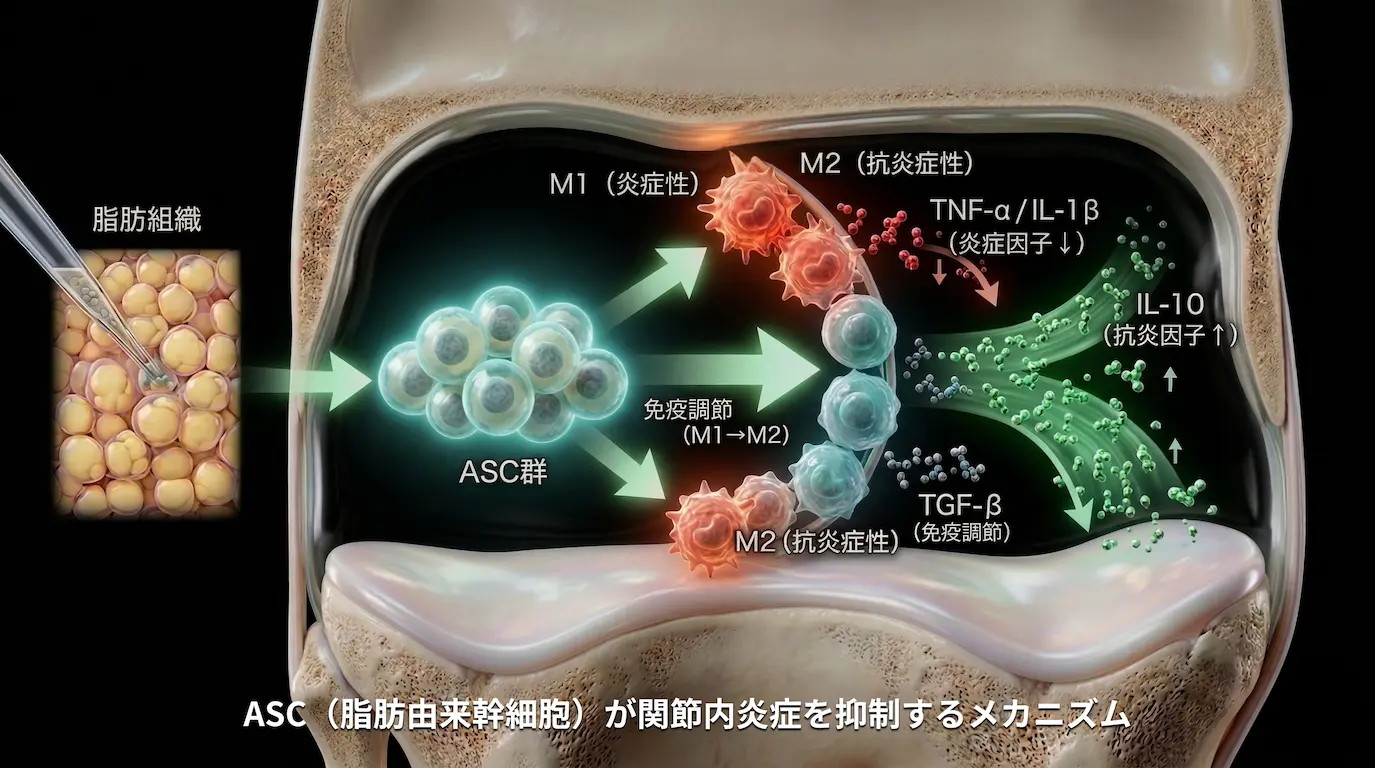
ASC are believed not to “directly regenerate damaged cartilage,” but rather to work by improving the internal joint environment. Research suggests four main mechanisms:
Reduce Inflammation
Suppresses the production of inflammatory substances and calms inflammation within the joint.
Regulate Immunity
Modulates immune responses to prevent further cartilage damage.
Support Chondrocytes
Supports the survival and function of remaining cartilage cells.
Improve Joint Environment
Improves the overall joint environment and may slow degenerative progression.
Importantly, ASC is positioned as an adjunctive therapy aimed at “suppressing further damage, protecting remaining tissue, and slowing degeneration through improving the joint environment.” This is why early intervention before severe degeneration is crucial.
Act on the Safety of Regenerative Medicine | Legal Position of ASC Therapy in Japan
In Japan, ASC therapy is not officially approved as a pharmaceutical product. However, under the “Act on the Safety of Regenerative Medicine (ASRM Act),” a framework exists that allows qualified medical institutions to provide it safely under specific conditions.
This category involves cultured and expanded cells and requires submission of a treatment plan and review by a certified committee. As of 2021, more than 935 plans have been approved, with scientific validation progressing under legal and governmental oversight.
※ Ginza YR Clinic provides treatment under a Class II regenerative medicine plan in compliance with legally required review and management systems.
ASC Therapy for Knee Osteoarthritis | Pain Improvement Data and Clinical Evidence
(6 months to 1 year post-treatment)
(as of 2021)
in some domestic clinics
Knee OA: The Most Studied Indication
Knee osteoarthritis has the most accumulated clinical data for ASC therapy. One common protocol involves injecting approximately 50 million ASC into a single knee. Several small-scale studies report a 50–60% improvement in pain scores (VAS) within 6 months to 1 year after treatment. Similar improvements have also been observed in WOMAC scores, which assess daily function.
Applications Beyond Knee OA: Dementia, ALS, Spinal Cord Injury, and More
Beyond knee osteoarthritis, ASC therapy is being studied for Alzheimer’s disease (reported cognitive improvements), ALS and Parkinson’s disease (symptom stabilization/improvement: 54–89%), spinal cord injury, COPD, osteoporosis, and more. In foot ulcer treatment, reports indicate approximately 80% sustained healing rates.
Risks and Considerations of ASC Therapy | An Honest Explanation of Current Limitations
While expectations for ASC therapy are growing, it is important to accurately understand its current limitations.
- There is still a lack of large-scale randomized controlled trials (RCTs), and comparative data with placebo remains limited
- The primary effects of treatment are pain reduction, inflammation control, and improvement of the joint environment
- The duration of effects generally lasts from about 1 to several years, varying depending on age, progression of degeneration, and cell quality
- In severe cases, the main effect may be limited to slowing disease progression
* ADSC therapy is a medical treatment provided under the Act on the Safety of Regenerative Medicine, and results may vary between individuals. This article is intended to provide general medical information and does not guarantee specific treatment outcomes. Please consult a medical specialist when considering treatment.
Why Early Intervention for Knee Joints Matters | Who Is Suitable for ASC Therapy
ASC therapy is considered most effective in the early to mid-stages of cartilage degeneration. It is ideally used as part of a comprehensive strategy to protect joints, combined with lifestyle improvements, physical therapy, and weight management.
Even at a stage where you feel “it doesn’t hurt that much yet,” having a specialist evaluate your joint condition is one of the wisest choices for maintaining long-term joint health.
Summary | Understanding Regenerative Medicine as One of Your Options
- ASC are stem cells derived from your own fat, with minimal burden on the body
- A supportive therapy aimed at reducing inflammation and slowing the progression of degeneration in joints
- In Japan, it is performed under legal and medical supervision within the framework of the Act on the Safety of Regenerative Medicine
- Early intervention preserves more possibilities for better outcomes
* This article is intended to provide medical information and does not guarantee specific treatment outcomes. Treatment progress and results vary by individual. Please consult a physician for details.
Adipose-Derived Stem Cell (ASC) Therapy at Ginza YR Clinic | Knee Joint Care and Whole-Body Regenerative Medicine

We provide adipose-derived stem cell (ASC) therapy for whole-body care and knee joint treatment.
Based in Ginza, our clinic focuses on regenerative medicine, combining joint care, anti-aging, and aesthetic treatments. Our specialists comprehensively evaluate each patient’s condition and propose treatments that support long-term health and quality of life.
Under the philosophy of “Ageing Well”, we aim not to fight aging, but to help you age healthily and naturally. Supporting the body at the cellular level and maintaining long-term well-being and quality of life is the foundation of Ginza YR Clinic.
► Learn more about ASC (Adipose-Derived Stem Cell) therapyMore Information & Consultation Booking
Tel03-6263-9219
References
- Pak J, et al. Adipose-derived stem cells and their secretome for knee osteoarthritis treatment. J Clin Med. 2018;7(12):572.
- Fodor PB, Paulseth SG. Adipose derived stromal cell (ADSC) injections for pain management of osteoarthritis in the human knee joint. Aesthetic Surgery Journal. 2016;36(2):229-236.
- Tohoku University Hospital Advanced Medicine & Regenerative Medicine Center. ADSC supply project for knee osteoarthritis. trmc.hosp.tohoku.ac.jp (accessed 2026)
- Ministry of Health, Labour and Welfare jRCT (Japan Registry of Clinical Trials). List of investigator-initiated trials related to ADSC. jrct.mhlw.go.jp (accessed 2026)
- Kojinkai Group. Status of implementation of Class II regenerative medicine provision plans (as of 2021). kojinkai.or.jp (accessed 2026)
- Japan Foundation for Medical Care Improvement (JFMC). Guidelines for evaluation of safety and efficacy in regenerative medicine. jfmc.or.jp (accessed 2026)
- PR TIMES. Clinical outcome report of ADSC therapy in domestic clinics (2024). prtimes.jp (accessed 2026)
- J-ARM (Journal of the Japanese Society for Regenerative Medicine). Latest trends in clinical applications of adipose-derived stem cells. j-arm.com (accessed 2026)