









MEDICAL REVIEW
Reviewed by Dr. Junya Higuchi, Director, Ginza YR Clinic
MD, PhD (The University of Tokyo) / Board-Certified Orthopedic Surgeon / Certified Regenerative Medicine Physician, Japanese Society for Regenerative Medicine / Certified Sports Physician, Japan Sport Association
His doctoral research at the University of Tokyo examined how adipose-derived stem cells act on cartilage wear in the knee (knee osteoarthritis).
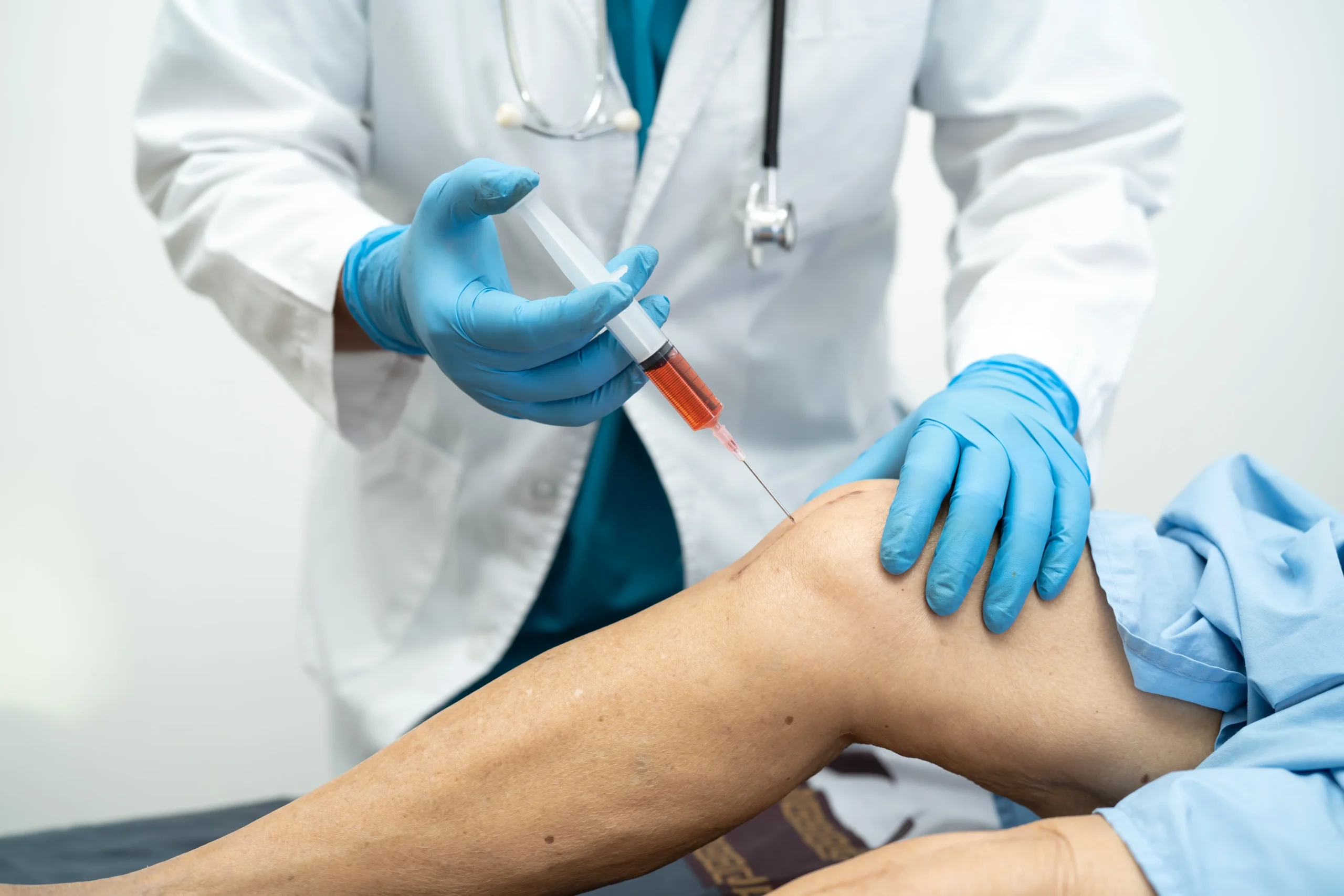
PRP joint injection uses your own blood. Platelets are concentrated from a small blood draw and injected directly into the joint — most often the knee. The reason for this roundabout route is structural: articular cartilage has no blood supply, so drugs and other agents struggle to reach it. Concentrating growth factors and delivering them straight to the site is a way around that problem. PRP is not a fast-acting treatment; many patients describe changes in pain gradually, over three to six months.
What this article covers
- ✓Cartilage has no blood vessels, so oral medication and standard injections have difficulty reaching it. PRP concentrates growth factors and delivers them directly to the site.
- ✓Clinical studies on PRP have reached conflicting conclusions. This article explains why — and the reason matters: PRP is not one fixed treatment. Change the preparation, and the result may change with it.
- ✓The real question is therefore not whether to have PRP, but who is designing the preparation, and on the basis of what assessment.
- ✓PRP is not a substitute for surgery. It is one option worth considering before surgery becomes the only path.
1. What PRP joint injection actually is
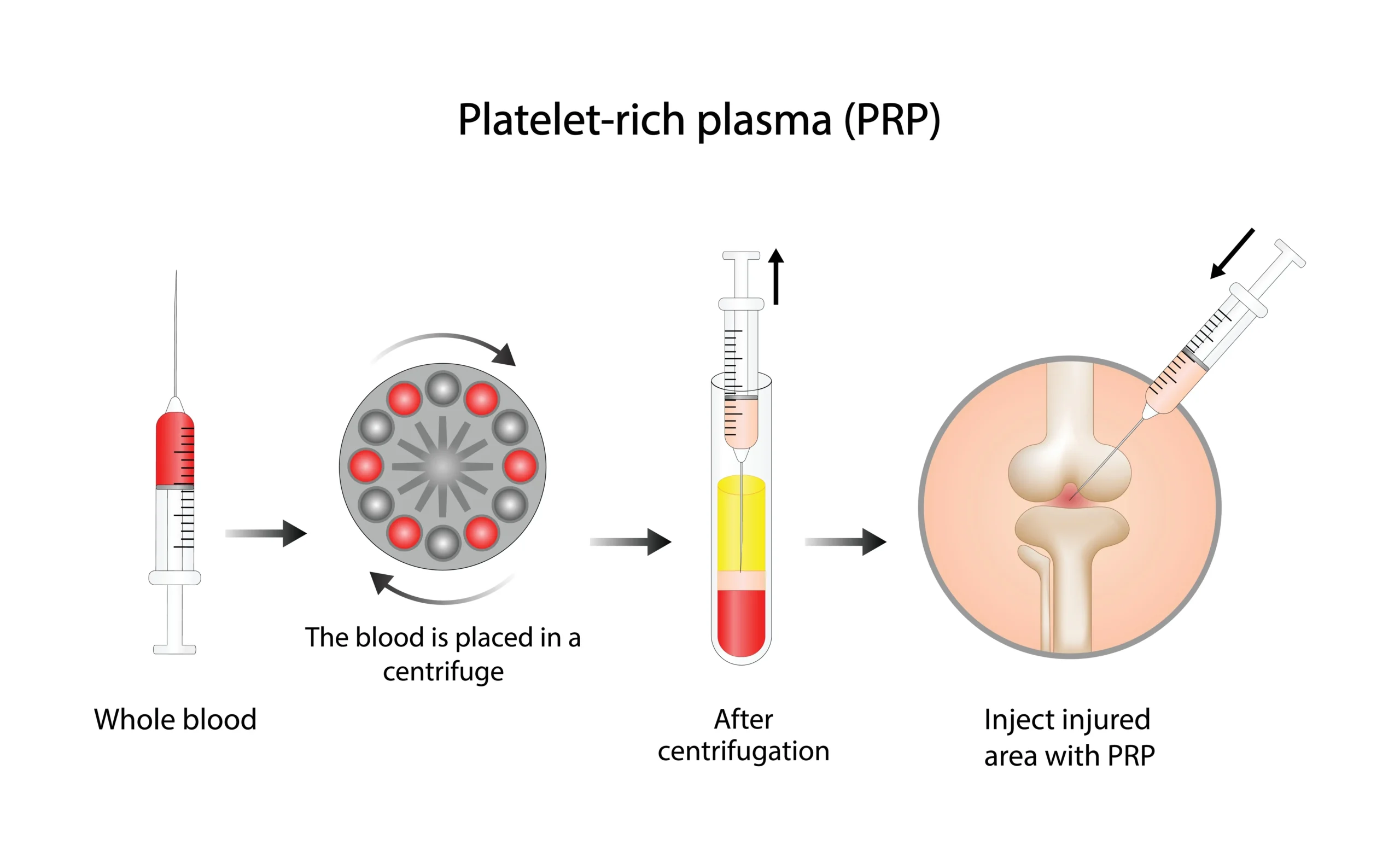
PRP (platelet-rich plasma) is the platelet-dense fraction separated from a patient’s own blood. Platelets carry a range of growth factors involved in tissue repair.
Injecting that fraction into a joint — knee, shoulder, or hip — is what PRP joint injection refers to. It is worth noting that orthopedics was the first field to study PRP and bring it into clinical use; the cosmetic and hair-restoration applications came later.
Start to finish in a single visit
STEP 1
Blood draw
STEP 2
Centrifugation
STEP 3
Platelet-rich fraction separated
STEP 4
Injected into the joint
2. Why agents struggle to reach articular cartilage
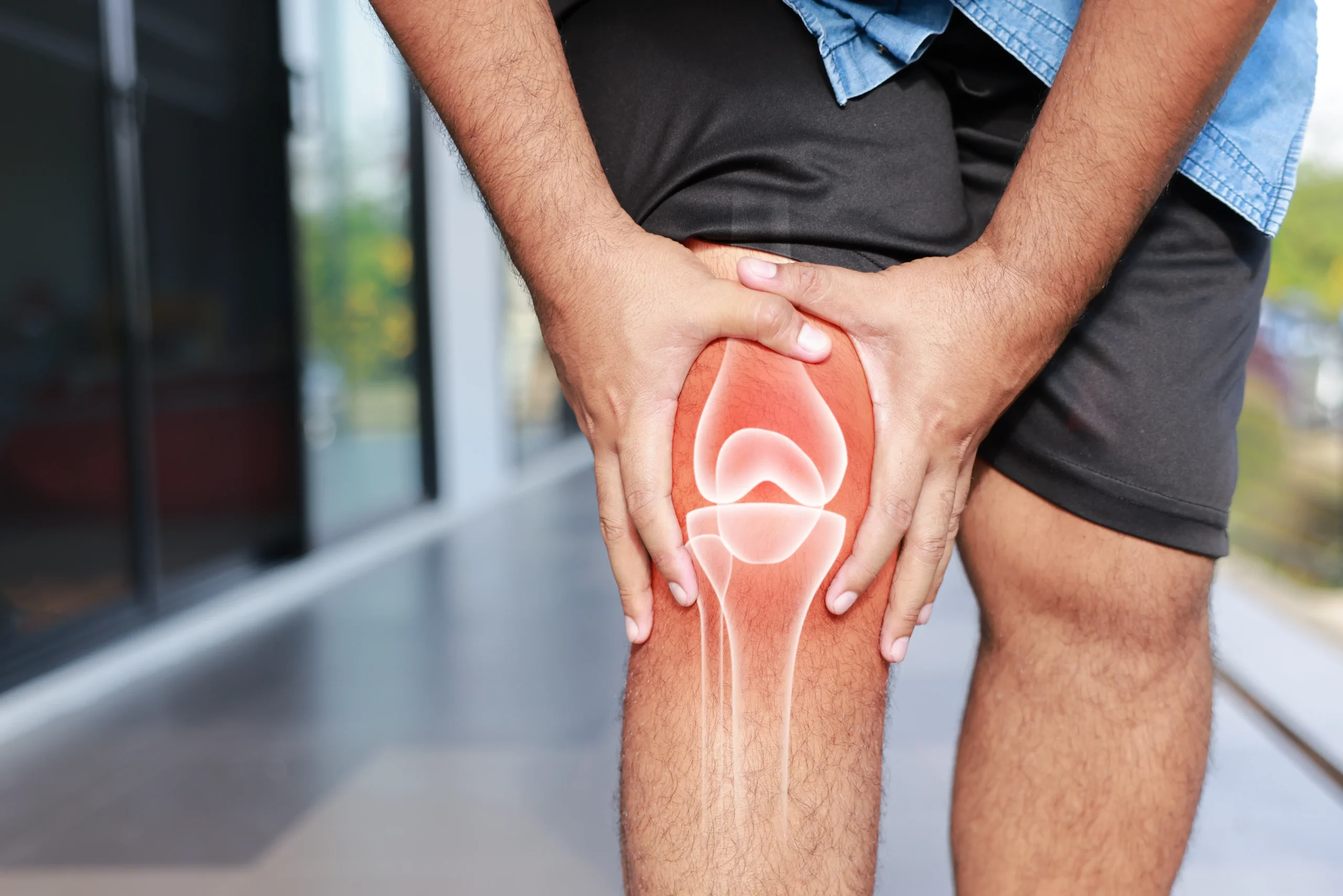
Articular cartilage has no blood vessels. Oral and injected medications travel through the circulation to reach their target, but cartilage receives almost no blood flow, so very little arrives. This is one reason joints are difficult to treat pharmacologically — and it may explain why some patients see limited benefit from conservative treatment.
If platelets and growth factors are already present in the body, why extract and reinject them? Two things matter here: concentration, and delivery.
Platelets and growth factors circulate throughout the body in a dispersed state, and may not reach a specific site at a meaningful concentration. PRP concentrates them by centrifugation and places them directly where they are needed, bypassing the circulation entirely. This is thought to act on inflammatory processes and influence tissue condition, which is part of why PRP came to be used in joints.
Principal growth factors in PRP
| Growth factor | Principal role |
|---|---|
| PDGF (platelet-derived growth factor) |
Stimulates cell proliferation; promotes formation of blood vessels, epithelium, and granulation tissue |
| TGF-β (transforming growth factor beta) |
Promotes extracellular matrix formation; regulates bone cell metabolism |
| VEGF (vascular endothelial growth factor) |
Promotes blood vessel formation |
| FGF (fibroblast growth factor) |
Promotes endothelial and fibroblast proliferation; stimulates angiogenesis |
3. Why the research findings disagree
Studies on PRP for the knee have not converged on a single answer.
Supportive findings
Belk et al. (2021) pooled 18 randomized controlled trials covering 1,608 patients and found PRP outperformed hyaluronic acid injection. The analysis also suggested that leukocyte-poor PRP (LP-PRP) may perform better than leukocyte-rich preparations.
Negative findings
Bennell et al. (2021), in a trial of 288 patients, found no statistically significant difference between PRP and saline placebo in either pain or cartilage volume.
How does the same treatment produce opposite results? Because PRP does not describe a single product. How far the platelets are concentrated, how many leukocytes remain, how many injections are given and at what interval, how the joint is assessed beforehand — vary these, and you have a different preparation. Studies that appear to be testing the same thing may in fact be comparing quite different formulations. That is the main reason the findings diverge.
The research question has shifted accordingly. It is no longer whether PRP works, but which formulation of PRP suits which patient. Several meta-analyses now report that parameters such as leukocyte content and platelet concentration influence outcomes.
Bensa et al. (2025) found a significant correlation between platelet concentration and clinical improvement, supporting the hypothesis that how the preparation is specified affects the result (Bensa et al., Am J Sports Med, 2025). Two products both called PRP can differ substantially depending on platelet concentration and leukocyte handling.
What separates outcomes is not PRP itself, but the clinical understanding behind it and the way the whole treatment plan is designed. Before deciding whether to have PRP, it is worth asking which formulation suits the joint in question. Change the design, and the outcome may change.
4. What design means in practice
Saying that design matters is an abstract claim. In joint PRP, the most consequential decision is how much leukocyte content to retain.
PRP comes in two broad types: leukocyte-rich (LR-PRP) and leukocyte-poor (LP-PRP). More concentrated is not automatically better, and more leukocytes does not mean more effective.
Starting with an aggressive formulation can aggravate inflammation inside the joint. A joint requires two things to be handled at once — calming inflammation and supporting tissue condition — which is why assessing the current inflammatory state is a precondition for designing the preparation, not an afterthought.
Reviewed before leukocyte content and injection plan are decided
Physical examination
Range of motion, swelling, the character and pattern of pain
Imaging
Current joint condition and degree of degeneration
Degree of inflammation
What is happening inside the joint right now
Treatment history
What has been tried, and for how long
Administering PRP and designing PRP are two different kinds of work. The first is a procedure; the second is a clinical judgment. In our view, the second is what determines the outcome.
5. Who it may suit, who it does not, and what to expect over time
Cases where PRP may be worth discussing
- ✓Knee osteoarthritis at Kellgren-Lawrence (KL) grade 2–3, i.e. mild to moderate degeneration on imaging
- ✓Limited improvement despite ongoing medication or injections
- ✓A wish to try other options before considering surgery
- ✓A goal of returning to sport or regular physical activity
- ✓Several treatments tried without satisfactory results
About the KL grading system
Kellgren-Lawrence grading classifies osteoarthritis severity from 0 to 4 based on X-ray findings. Grades 2–3 (mild to moderate joint space narrowing) are where the evidence for PRP is most developed. At grade 4 — advanced deformity with bone-on-bone contact — the problem is primarily structural, and PRP is generally not indicated. At Ginza YR Clinic, imaging is always reviewed before a decision is made.
One point to be clear about: PRP does not replace standard care. Where exercise therapy, activity guidance, or topical medication should come first, we will say so and start there. If assessment indicates PRP is not appropriate, we will tell you directly.
Not suitable, or requiring detailed assessment beforehand
- •Coagulation disorders or blood conditions such as hemophilia
- •Active infection within the joint
- •Pregnancy or breastfeeding
- •Long-term corticosteroid use, or current anticoagulant therapy
- •Blood-borne viral infection (HIV, hepatitis C, hepatitis B, and similar)
- •Active cancer treatment, or recent completion of treatment (confirmation with your treating physician is required)
- •Advanced joint deformity where the problem is primarily structural (surgical options need to be considered alongside)
What to expect, and when
PRP is not a fast-acting treatment. It works with the body’s own repair processes rather than overriding them.
| Timing | What to expect |
|---|---|
| First few days | Pain may temporarily increase. This is part of the repair response and usually settles within a week. |
| Around 1 month | Patients who respond more quickly may begin to notice a change in their pain. |
| 3–6 months | The period in which reduced pain and improved joint function are most often reported. |
Individual results vary, and the same course cannot be guaranteed for everyone.
6. Risks and side effects
Because PRP is prepared from your own blood, the risk of an allergic reaction to a foreign substance is low. That does not make the risk zero.
Common temporary reactions
Increased pain, swelling, or warmth after injection
Usually settles within a week
Related to the needle
Pain, bleeding, or stiffness at the injection site
Usually resolves within a few days
Uncommon risks
Infection within the joint (septic arthritis)
Requires prompt medical attention
A temporary flare of pain after injection is relatively common with PRP and generally settles within days. We consider it important that patients know this before, not after.
7. The outcome depends on who designs the treatment
The through-line of everything above is this: what separates outcomes is the design of the treatment plan. The decisive part is not the blood draw, the preparation, or the injection — it is the examination and the indication assessment that precede them.
How far to reduce leukocyte content, or whether to retain some. Whether this joint, in its current state, should be injected at all. Judgments of that kind draw on two things:
Clinical experience with joints and soft tissue
Years of examining joints and following treatment courses across a large patient population.
Research grounding in how cells repair tissue
Doctoral research at the University of Tokyo on how adipose-derived stem cells act on cartilage wear in the knee.
Dr. Junya Higuchi brings both. (MD, PhD, The University of Tokyo / Board-Certified Orthopedic Surgeon / Certified Regenerative Medicine Physician, Japanese Society for Regenerative Medicine / Certified Sports Physician, Japan Sport Association)
Three principles behind PRP at Ginza YR Clinic
1
Prepared in-house, injected the same day
Blood draw, preparation, and injection are all completed on site, on the day of your visit. We do not use freeze-dried (FD) preparations, which require longer processing.
2
Only components derived from your own blood
Our PRP consists solely of components separated from the patient’s own blood.
3
Performed under certified supervision
From preparation through injection, under the oversight of a physician certified by the Japanese Society for Regenerative Medicine.
Easily overlooked: in Japan, PRP requires a government filing
PRP may only be provided by clinics that have filed a regenerative medicine provision plan with the national government and had it accepted. Without that filing, the treatment cannot legally be offered. More importantly, the filing is site-specific. A clinic registered only for facial PRP may not perform PRP on the scalp or on joints.
Ginza YR Clinic holds accepted filings for all three sites — face, joints, and scalp (joints: PB3250225; face/skin: PC3250241; scalp/hair: PC3250242).
When comparing clinics, we would suggest confirming that the clinic holds a filing for the specific site you are considering.
Note: A filing confirms that a clinic has completed the required legal procedure. It is not a government endorsement of efficacy.
8. What happens at Ginza YR Clinic

STEP 1
Consultation and indication assessment
The physician reviews physical findings, imaging, inflammatory status, and treatment history. Diagnosis and treatment design carry the most weight here — whether PRP is a reasonable option for you, or whether standard care should come first.
STEP 2
Blood draw
Blood is drawn from a vein in the arm, the same procedure as a routine health check.
STEP 3
PRP preparation
The sample is centrifuged to prepare the PRP. Leukocyte content is specified by the physician according to the inflammatory state of the joint. Everything is prepared on site and injected the same day.
STEP 4
Injection into the joint
The preparation is injected into the joint under strict sterile technique to minimize infection risk.
STEP 5
Post-procedure check and aftercare
The same physician — a certified regenerative medicine physician and board-certified orthopedic surgeon — handles examination, treatment design, and injection from start to finish. You will be briefed on the possible temporary increase in pain and on what to watch for in daily life.
9. Frequently asked questions
Q. Does PRP actually help knee pain?
The evidence is mixed. Belk et al. (2021), pooling 18 randomized controlled trials, reported better results than hyaluronic acid injection; Bennell et al. (2021), in a large trial, found no significant difference from placebo. The prevailing explanation for the discrepancy is variation in how the PRP was prepared — platelet concentration, leukocyte content, number of injections. That is precisely why we place diagnosis and treatment design above everything else.
Q. How is PRP different from hyaluronic acid injection?
They serve different purposes. Hyaluronic acid lubricates and protects the joint and is covered by Japanese national health insurance. PRP delivers growth factors from your own blood into the joint, targeting tissue repair and the inflammatory response, and is a self-pay treatment. A 2025 meta-analysis of 12 randomized controlled trials reported that intra-articular leukocyte-poor PRP (LP-PRP) produced significantly better results than hyaluronic acid injection. That said, PRP outcomes are closely tied to how the preparation is specified, so a simple head-to-head ranking is misleading.
Q. Is leukocyte-rich or leukocyte-poor PRP better?
It depends on the state of the joint. Several meta-analyses suggest leukocyte-poor PRP (LP-PRP) may give better results in the knee. But fewer leukocytes is not always better as a rule — the formulation has to match the inflammatory picture, and that judgment rests heavily on clinical experience.
Q. How soon will I notice a change, and how many sessions are needed?
PRP does not work quickly. Faster responders may notice a change in pain at around one month; most report reduced pain and improved function over three to six months. The number of injections and the interval between them depend on the state of the joint, the stage of degeneration, and your treatment history, and are decided by the physician after examination. Results vary between individuals.
Q. Can PRP be used in joints other than the knee?
Yes — it is also used clinically in the shoulder and hip, among others. However, the depth of evidence differs by site and condition. A board-certified orthopedic surgeon assesses each case individually to determine whether PRP is appropriate for that joint and that condition.
Q. What does it cost, and is it covered by insurance?
PRP joint injection is a self-pay treatment and is not covered by Japanese national health insurance. Hyaluronic acid and corticosteroid injections are covered; PRP is not. At Ginza YR Clinic, PRP joint injection for one knee starts at ¥264,000 (tax included) per session. Package and multi-session pricing is explained at consultation. A first-visit fee of ¥3,300 or a follow-up fee of ¥2,200 applies separately.
A note from the director
I have spent my career as an orthopedic surgeon treating a large number of patients. In parallel, my doctoral research at the University of Tokyo looked at how adipose-derived stem cells affect the pain of cartilage wear in the knee — the mechanism of stem cell therapy itself.
In this article I have deliberately stated that the evidence points in two directions. If the goal were simply to sell PRP, that section would be better left out. I included it because I believe patients should be making decisions from accurate information.
What separates outcomes is not PRP, but how it is designed. Should this joint be injected, in its current state? Answering that requires both — long clinical experience examining joints, and a research understanding of how cells repair tissue. I do not think either alone is enough.
When a patient tells me they had PRP elsewhere and it did nothing, the first thing I revisit is the diagnosis. If the diagnosis did not match the indication, no formulation of PRP was going to produce a good result.
I have taken the medication, I have had the hyaluronic acid, nothing has changed — but I do not want surgery. I hear that regularly in clinic. Those are exactly the patients I want to be able to offer PRP to, properly designed. What it can reasonably be expected to do, and what it cannot — I will tell you both.
Dr. Junya Higuchi, Director, Ginza YR Clinic
MD, PhD (The University of Tokyo) / Board-Certified Orthopedic Surgeon / Certified Regenerative Medicine Physician, Japanese Society for Regenerative Medicine / Certified Sports Physician, Japan Sport Association
GINZA YR CLINIC — GINZA, TOKYO
The question is not whether to have PRP. It is how it is designed.
A director with both orthopedic clinical experience and a research background in regenerative medicine handles your case from diagnosis through treatment design.
Tel: +81-3-6263-9219
References
- •Belk JW, Kraeutler MJ, Houck DA, et al. Platelet-Rich Plasma Versus Hyaluronic Acid for Knee Osteoarthritis: A Systematic Review and Meta-analysis of Randomized Controlled Trials. Am J Sports Med. 2021;49(1):249–260.
- •Bennell KL, Paterson KL, Metcalf BR, et al. Effect of Intra-articular Platelet-Rich Plasma vs Placebo Injection on Pain and Medial Tibial Cartilage Volume in Patients With Knee Osteoarthritis: The RESTORE Randomized Clinical Trial. JAMA. 2021;326(20):2021–2030.
- •Bensa A, Previtali D, Sangiorgio A, et al. PRP Injections for the Treatment of Knee Osteoarthritis: The Improvement Is Clinically Significant and Influenced by Platelet Concentration. Am J Sports Med. 2025;53:745–754.
- •Intraarticular Leukocyte-Poor Platelet-Rich Plasma Injection Is More Effective Than Intraarticular Hyaluronic Acid Injection in the Treatment of Knee Osteoarthritis: A Systematic Review and Meta-analysis of 12 Randomized Controlled Trials. 2025.
- •Ministry of Health, Labour and Welfare, Japan. Act on the Safety of Regenerative Medicine.
Reviewed by Dr. Junya Higuchi, Director, Ginza YR Clinic
(MD, PhD, The University of Tokyo · Board-Certified Orthopedic Surgeon · Certified Regenerative Medicine Physician, Japanese Society for Regenerative Medicine · Certified Sports Physician, Japan Sport Association)
This article follows Japan’s Medical Advertising Guidelines and the Pharmaceuticals and Medical Devices Act, and makes no guarantee of any specific outcome. Results vary between individuals. PRP joint injection is a self-pay treatment not covered by Japanese national health insurance. All fees and regulatory information refer to Japan.