








Understand the background of the pain first, then weigh the treatment options

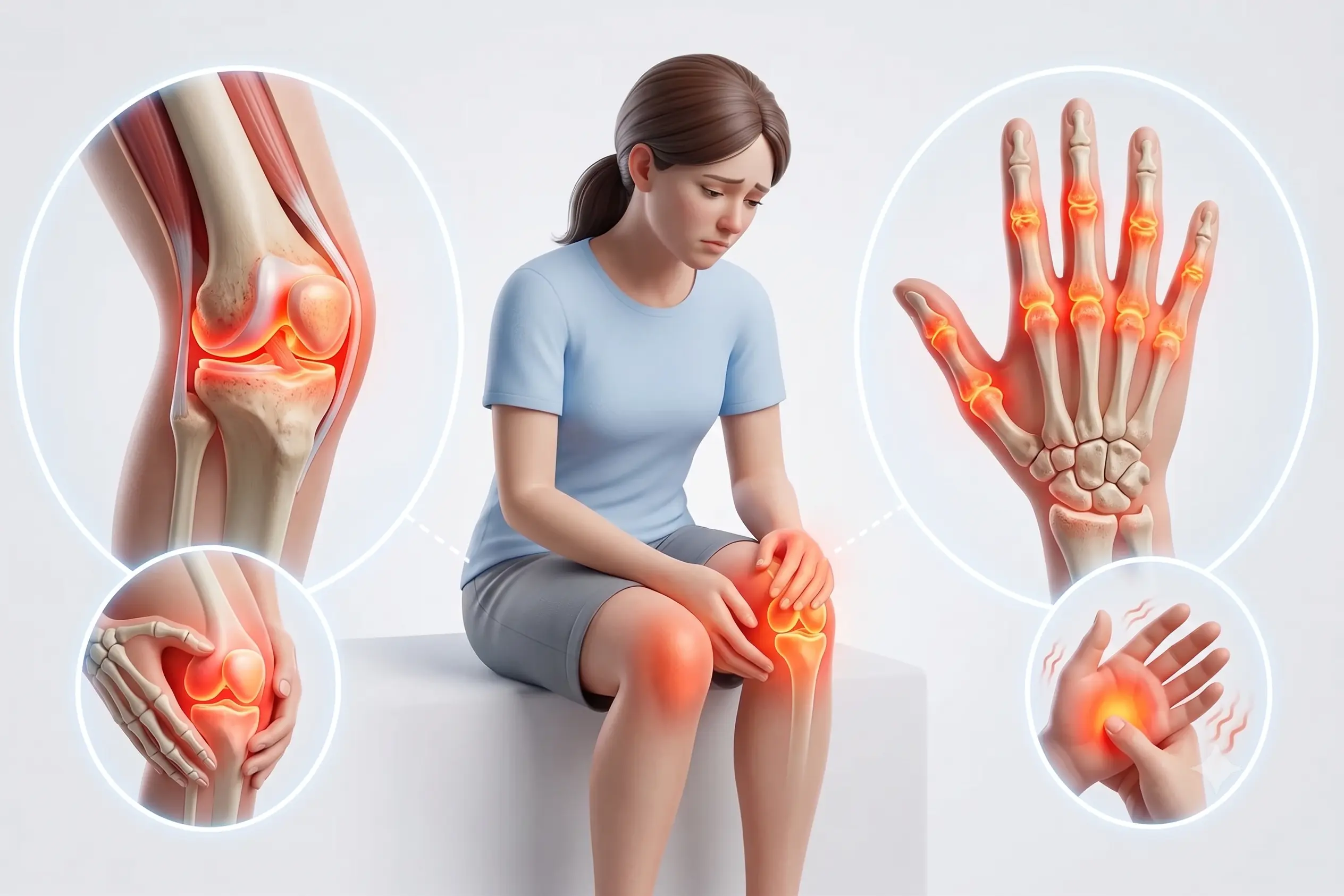
In Japan, an estimated 25.3 million people aged 40 and over show knee osteoarthritis on X-ray, and roughly 8 million of them have symptoms. For joint pain, conservative care is the first-line approach in guidelines worldwide. Regenerative medicine sits further along that path — an option when conservative care proves insufficient.
This article is intended to provide medical information. It does not guarantee any specific treatment outcome. Suitability for treatment and the course of recovery vary between individuals.
What to Consider First When a Joint Hurts
When you notice joint pain or discomfort, the first task is to separate two possibilities: a temporary strain, or an underlying cause that warrants examination. How the pain presents, whether there is swelling, warmth, or restricted movement, and whether an injury occurred — all of these change what should happen next. Rather than deciding on your own and continuing to wait, organising how the symptoms have developed gives your doctor something concrete to work with.
What matters at the outset is not only where it hurts, but when it started, which movements bring it on, and how severe it is. Stiffness only in the morning, pain when walking, or pain accompanied by swelling and redness each point in different directions. It may stem from ordinary strain, but inflammation, injury, or osteoarthritis can also be involved — which is why it is unwise to settle on a single explanation too early.
This information makes it far easier to narrow down the cause. Even when regenerative medicine is under consideration, understanding the background of the symptoms is where it begins. Treatment options shift according to the cause, how far things have progressed, and the condition of the joint — they cannot be decided on apparent pain severity alone.
Why It Is Better Not to Rush to Your Own Conclusion
Joint pain spans a wide range, from temporary overuse to inflammatory disease, degeneration, and injury. Similar-feeling pain can call for entirely different responses, so concluding “it was the same last time” or “it’s probably just age” can delay a necessary assessment. Tracking how the symptoms change, and consulting a doctor when appropriate, tends to lead to a sounder judgement in the end.
The Fundamentals of Joint Care and Regenerative Medicine
In Japan, an estimated 25.3 million people aged 40 and over meet the radiographic criteria for knee osteoarthritis, and approximately 8 million of them experience symptoms such as pain (estimates from the ROAD Project, University of Tokyo). Knee pain is anything but unusual.
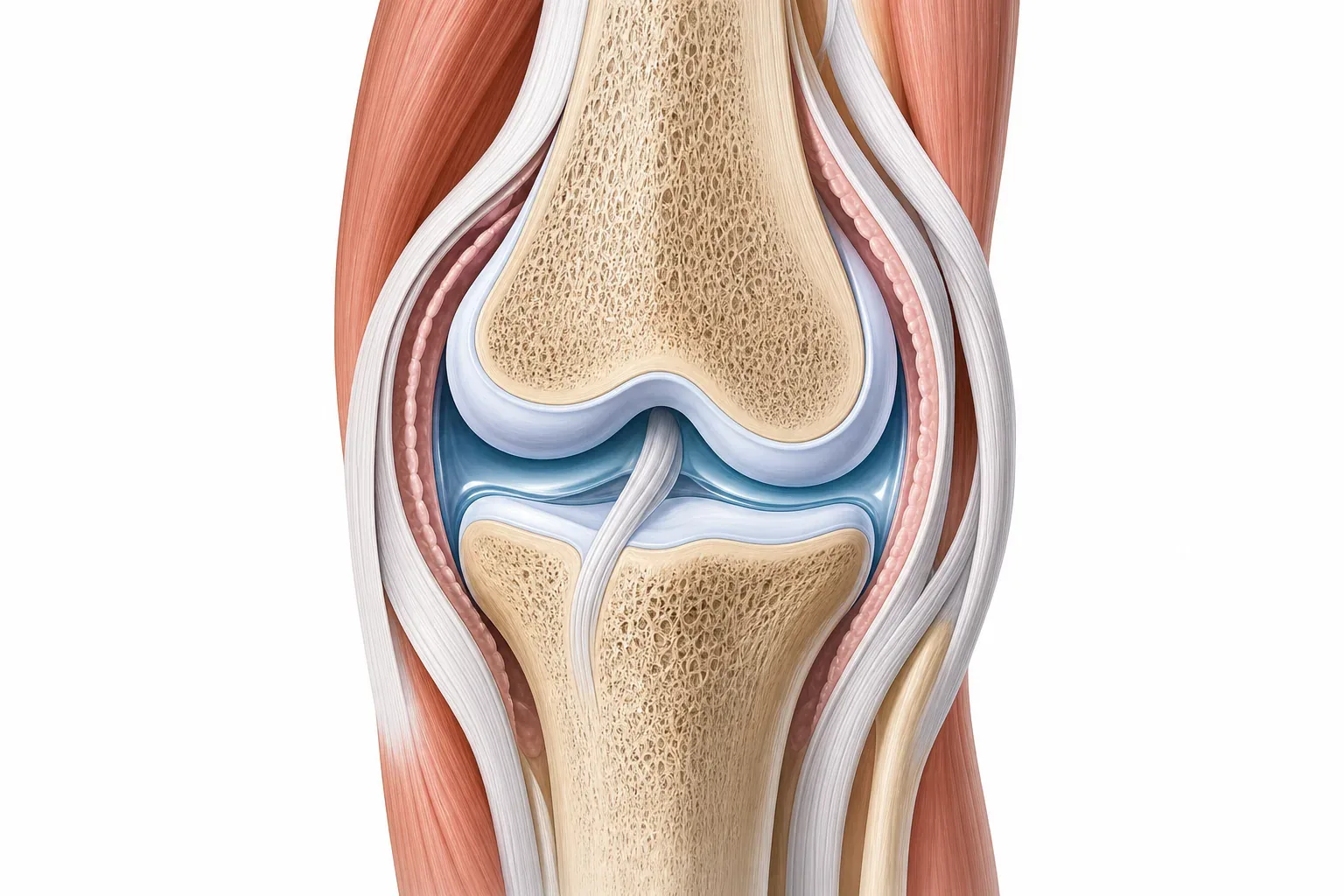
Joint pain and discomfort involve more than the joint itself. The cartilage, the synovium (the membrane lining the inner surface of the joint capsule, which produces synovial fluid), the ligaments, and the muscles are all part of the picture. The first step is to clarify where the pain occurs, with which movement, and when it intensifies. Regenerative medicine refers to approaches that supplement the function of compromised tissue or work with the body’s own repair mechanisms — but it does not apply equally to every joint problem.
What a Joint Is Made Of
A joint is a collaboration between several tissues, arranged so that bone can move against bone without collision. The cartilage covering the surfaces smooths movement and distributes load. Synovial fluid improves glide, and the synovium produces that fluid. Ligaments and muscles support and stabilise the whole structure. A change in any one of these can lead to pain or difficulty moving.
Why “Worn Cartilage Equals Pain” Does Not Hold
Cartilage contains neither nerves nor blood vessels. Cartilage wearing down does not, in itself, generate pain. What is actually felt as pain comes from changes in the tissues around the cartilage — the synovium, the bone, the ligaments. This is precisely why the degree of deformity visible on an X-ray so often fails to match the severity of the pain a person reports.
Where inflammation is present, the tissues enclosing the joint are irritated, which can bring swelling and warmth. Situations such as “the imaging looks fine but it hurts a great deal” or “the deformity has advanced but the pain is mild” arise because the source of the pain is not the cartilage itself.
What “Regenerative Medicine” Actually Means
Regenerative medicine describes an approach aimed at restoring lost function and repairing tissue. Broadly, it covers methods that use cells, blood-derived components, or the bioactive substances they contain, to act on the body’s repair response. That said, the term covers a wide range of very different things. Treatments using cells, treatments using blood-derived components, and treatments that target the tissue repair environment do not share the same standing or the same strength of evidence.
What Is Known, and What Remains Unclear
The foundations of joint care are load management, exercise therapy, weight management, and medical intervention where needed. As for regenerative medicine, research continues to advance, yet questions remain around which conditions it suits, which methods are appropriate, and what happens over the long term. Where the joint has deteriorated considerably, or where pain has more than one source, regenerative medicine alone may not resolve the picture.
With this information, it becomes easier to judge whether the problem lies in the joint itself or whether muscles and tendons play the larger part.
When Is It Worth Seeing a Doctor
Joint pain and discomfort sometimes settle with a little rest. But when it interferes with daily life, or when symptoms persist, that is a reasonable point to seek medical advice. Where swelling, warmth, or difficulty moving are involved, confirming the cause tends to serve better than continuing to wait.
Symptoms That Commonly Prompt Consultation
- ·Pain that began after a fall or injury
- ·Marked swelling or visible deformity
- ·Difficulty bearing weight, or loss of strength
- ·Accompanying fever
- ·Waking at night because of pain
- ·Accompanying numbness or altered sensation
What to Confirm Before Your Appointment
Checklist
The more of these that apply, the more reasonable it becomes to consult a doctor.
How joint symptoms should be approached depends on the cause. Even when treatment including regenerative medicine is under consideration, the background of the pain and the condition of the joint must be established first, after which a doctor determines suitability.
How to Think About Treatment Options
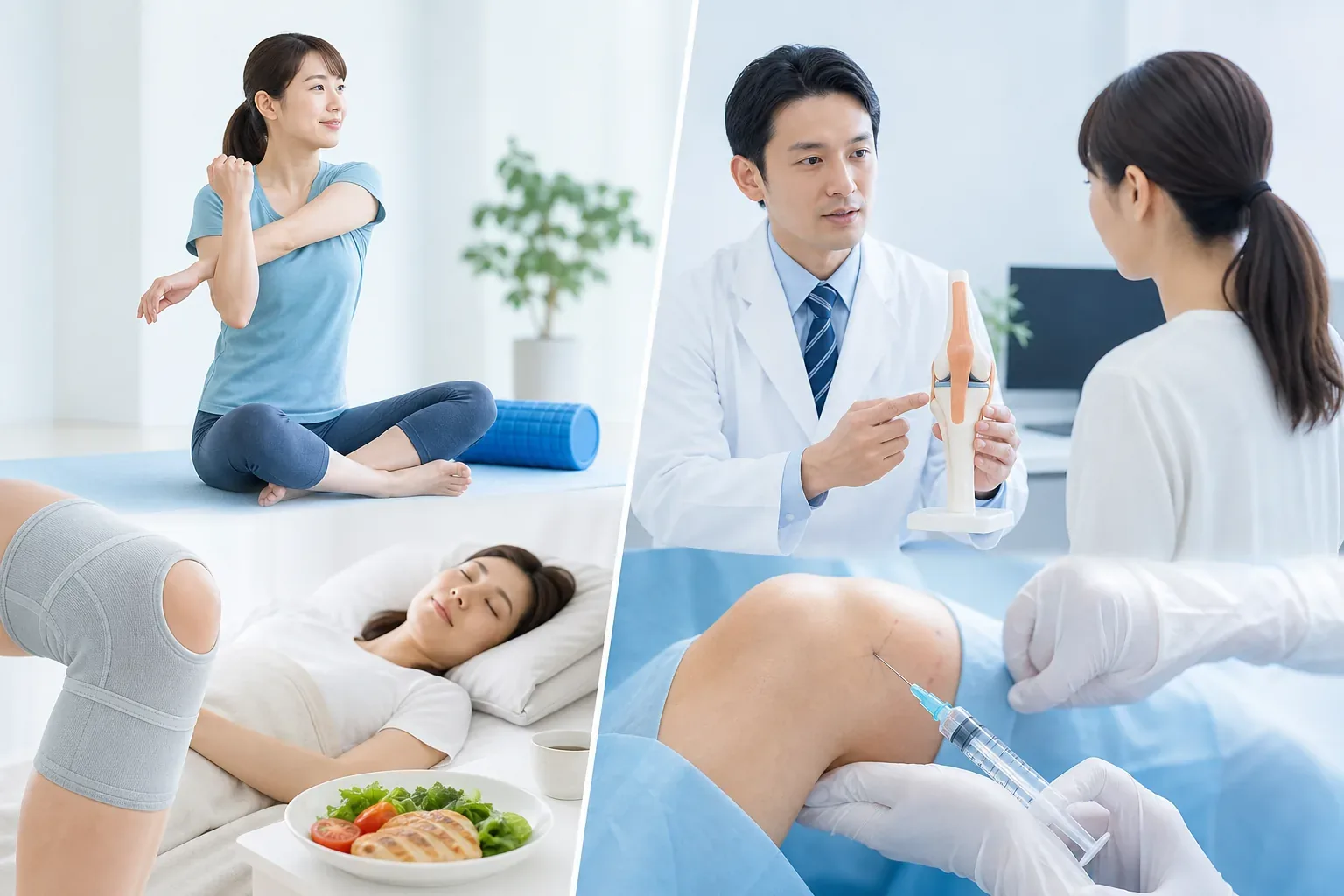
When joint pain or discomfort appears, the useful question is which level of response the current situation calls for. It is not a matter of which approach is superior, but of weighing symptom severity, the likely cause, and the effect on daily life. Treatment including regenerative medicine becomes easier to understand when positioned as one stage among several.
Exercise therapy, bracing, and rehabilitation are not “things you do instead of going to a clinic.” They are conservative treatments prescribed and supervised by a medical institution after your condition has been assessed. Confusing the two can lead people to skip the approaches that should be tried first and move straight to more invasive options.
To find out which stage applies to you, start with a consultation.
Points to Weigh When Considering Regenerative Medicine
Regenerative medicine is sometimes considered as one option for joint symptoms, but it does not suit everyone equally. Whether it is appropriate depends on symptom severity, the state of the joint, and how other treatments have gone.
At our clinic, the joint-related treatments we provide are as follows.
For all of these, suitability is determined through examination, and neither the outcome nor the course can be stated in advance. For details of what each treatment involves, along with costs and risks, please see our price list and PRP treatment page.
What to Discuss with Your Doctor
Choosing a treatment is not a matter of pain severity alone. The effect on daily life, how easily you can attend appointments, and the aftercare required all belong in the decision.
The Legal Framework for Providing Regenerative Medicine
In Japan, the Act on the Safety of Regenerative Medicine (in force since November 2014) restricts treatments using cells or blood-derived components to medical institutions that have passed review by a Certified Special Committee for Regenerative Medicine and filed a provision plan with the Ministry of Health, Labour and Welfare.
Our clinic’s notification numbers for joint-related treatment are as follows.
Acceptance of a notification indicates that the institution has completed the procedures required by law. It does not mean the state has approved the treatment’s efficacy.
Limitations and Cautions
Joint care and regenerative medicine are among the options for addressing pain and discomfort, but the aims of treatment and the way effects appear vary between individuals. Because the underlying cause may be inflammation, degeneration, or injury, what can be expected from the same treatment is not uniform. Establishing what the treatment is actually directed at, and approaching it without inflated expectations, matters a great deal.
What Can Be Expected, and What Should Not Be Overstated
With regenerative medicine and joint care, reducing pain and easing the burden of daily life may be the goal. How far damaged tissue changes, and how long symptoms continue, depends on age, the condition of the joint, activity level, and medical history. Some methods remain at the research stage, and it is important not to receive something whose clinical standing is not yet settled as though it were established treatment.
Confirming Side Effects and Burden
With treatments provided privately, local reactions such as pain, swelling, bruising, redness, or discomfort at the injection site can occur. Rarely, events requiring attention — infection or allergic reaction — are also possible. Where the materials or preparations used fall outside domestic approval in Japan, their regulatory standing, available safety information, cost, required testing, and the response should anything go wrong all need to be confirmed beforehand.
What to Confirm Before Undergoing Treatment
Situations Where Self-Assessment Should Be Avoided
Where pain has persisted, where there is swelling or warmth, where movement is markedly restricted, or where symptoms have continued since an injury, the cause needs to be established by examination before any treatment is chosen. Suitability should not be decided from visible changes or transient symptoms alone, but judged comprehensively, including imaging and clinical findings.
What Current Research Shows
Research into joint care and regenerative medicine continues to advance, though the standing of some treatments is still being worked out. The short answer is that even where studies in humans offer a degree of support, the conditions studied, the outcome measures used, and the follow-up periods differ, so effects cannot be generalised or stated definitively.
What Studies in Humans Have Established
For PRP therapy in osteoarthritis, multiple randomised controlled trials and meta-analyses have been reported, some showing changes in pain and function measures. However, studies differ in participant numbers, PRP preparation method, platelet concentration, and injection frequency, and the conclusions do not align. Even where the label “PRP” is the same, what is actually injected varies from study to study, so the result of one study cannot be transferred directly to another treatment.
By contrast, for intra-articular exosomes and stem cell secretome, high-quality comparative trials in humans remain limited, and these are best regarded as research-stage technologies. Basic research into their mechanisms of action is progressing, but the stage at which clinical efficacy could be described as established has not been reached.
The point is that treatments grouped under the single phrase “regenerative medicine” differ considerably in how much evidence stands behind them.
What Remains Unclear
At present there is no sufficiently established conclusion as to which treatment benefits whom and to what degree, or how long any effect lasts. The state of a joint involves cartilage, meniscus, synovium, muscle strength, and alignment, so research findings do not lend themselves to simple comparison. Long-term results, the need for repeat treatment, and accumulated safety data also differ from one treatment to another.
How to Regard Non-Peer-Reviewed Research
Conference presentations, preprints, and other material that has not been peer-reviewed can offer leads for future research, but they do not indicate that a treatment’s efficacy has been established. When reading about regenerative medicine, it is worth confirming whether the basis for a claim is a peer-reviewed paper, or a conference presentation or company announcement.
The Position in Japan
Regenerative medicine provided privately in Japan may incorporate findings that remain at the research stage. Having completed the required regulatory procedures is not the same thing as having established efficacy. When thinking about joint care, rather than judging from research findings alone, it is best to discuss your own symptoms, imaging findings, and effect on daily life individually with a doctor.
Frequently Asked Questions
Summary, and When to Seek Advice
When joint pain or discomfort appears, the first useful step is to organise which area is affected, when, and with which movements. Because the approach to joint care and regenerative medicine shifts according to the background and progression of the symptoms, even the same knee pain calls for different responses in different people.
Regenerative medicine can be one option when considering joint treatment, but not everyone can expect the same change. How the effect is experienced, how many sessions are needed, the course of recovery, and the risks all vary between individuals, and suitability has to be judged through examination.
Consulting a medical institution is worth considering when
- ✓Pain keeps recurring
- ✓Stairs or walking have become difficult
- ✓There is swelling or warmth
- ✓Daily life is affected
Seeking advice early makes it easier to work out an approach suited to your current condition, conservative care included. This article is intended to provide medical information and does not guarantee any specific treatment outcome. Results vary between individuals.
Consultations and Appointments
At Ginza YR Clinic, a doctor reviews the options individually, regenerative medicine among them, in light of the condition of the joint and the aim of treatment. If you have symptoms that concern you, or are considering treatment, please start with a consultation so that suitability can be confirmed.
Ginza YR Clinic — Consultations and Appointments
WebBook online
Css Building III 7F, 6-5-13 Ginza, Chuo-ku, Tokyo 104-0061
5 minutes’ walk from Exit C3/C2, Ginza Station (Tokyo Metro)
- The umbilical cord-derived stem cell secretome used in this treatment is an unapproved pharmaceutical that has not received approval under Japan’s Pharmaceuticals and Medical Devices Act.
- It is sourced through a domestic route for medical institutions, using umbilical cord blood from healthy Japanese donors.
- There is no domestically approved pharmaceutical with equivalent composition or performance.
- It is not approved in the major countries of Europe or North America. Significant risks may not yet have been identified.
- In the event of a serious adverse reaction, the national Relief System for Sufferers from Adverse Drug Reactions does not apply.
- The iPS cell-derived exosomes used in this treatment are an unapproved pharmaceutical that has not received approval under Japan’s Pharmaceuticals and Medical Devices Act.
- They are sourced through a domestic route for medical institutions.
- There is no domestically approved pharmaceutical with equivalent composition or performance.
- They are not approved in the major countries of Europe or North America. Research is under way in several countries, and significant risks may not yet have been identified.
- In the event of a serious adverse reaction, the national Relief System for Sufferers from Adverse Drug Reactions does not apply.
Dr. Junya Higuchi, Director, Ginza YR Clinic
MD, PhD (University of Tokyo) | Board-certified Orthopaedic Surgeon | Certified Physician, Japanese Society for Regenerative Medicine | Certified in Sports Medicine
References
- Ministry of Health, Labour and Welfare, Act on the Safety of Regenerative Medicine (in force November 2014)
- ROAD Project, 22nd Century Medical Center, The University of Tokyo Hospital (epidemiological survey of osteoarthritis)
- Japanese Society for Regenerative Medicine, official website
Results vary between individuals. This is a private, self-funded treatment not covered by insurance. This article is intended to provide medical information and does not guarantee any specific outcome.