








A 2026 analysis pooling 32 trials found that PRP outcomes track with the total number of platelets actually delivered into the joint.
That total is not the same thing as the concentration figures you see in marketing. Here is how the two differ, and why the difference changes the result.
Doubling the concentration does not double the platelets
Read about PRP and you will run into phrases like “five times whole blood concentration” or “prepared with a high-concentration system.”
Concentration is a real metric. But it is a ratio, nothing more.
CONCENTRATION
Total platelets ÷ Volume of fluid
So how do you raise it? There are two routes: collect more platelets, or reduce the fluid. The second route adds no platelets at all. It packs the same number into a smaller volume.
Take a concrete case. You draw 40 mL of blood and recover 5 billion platelets. Change the final volume and this is what happens.
The concentration is now five times higher. The platelet count is still 5 billion. And 5 billion is what reaches the joint.
What actually determines the platelet count
Two factors, and only two.
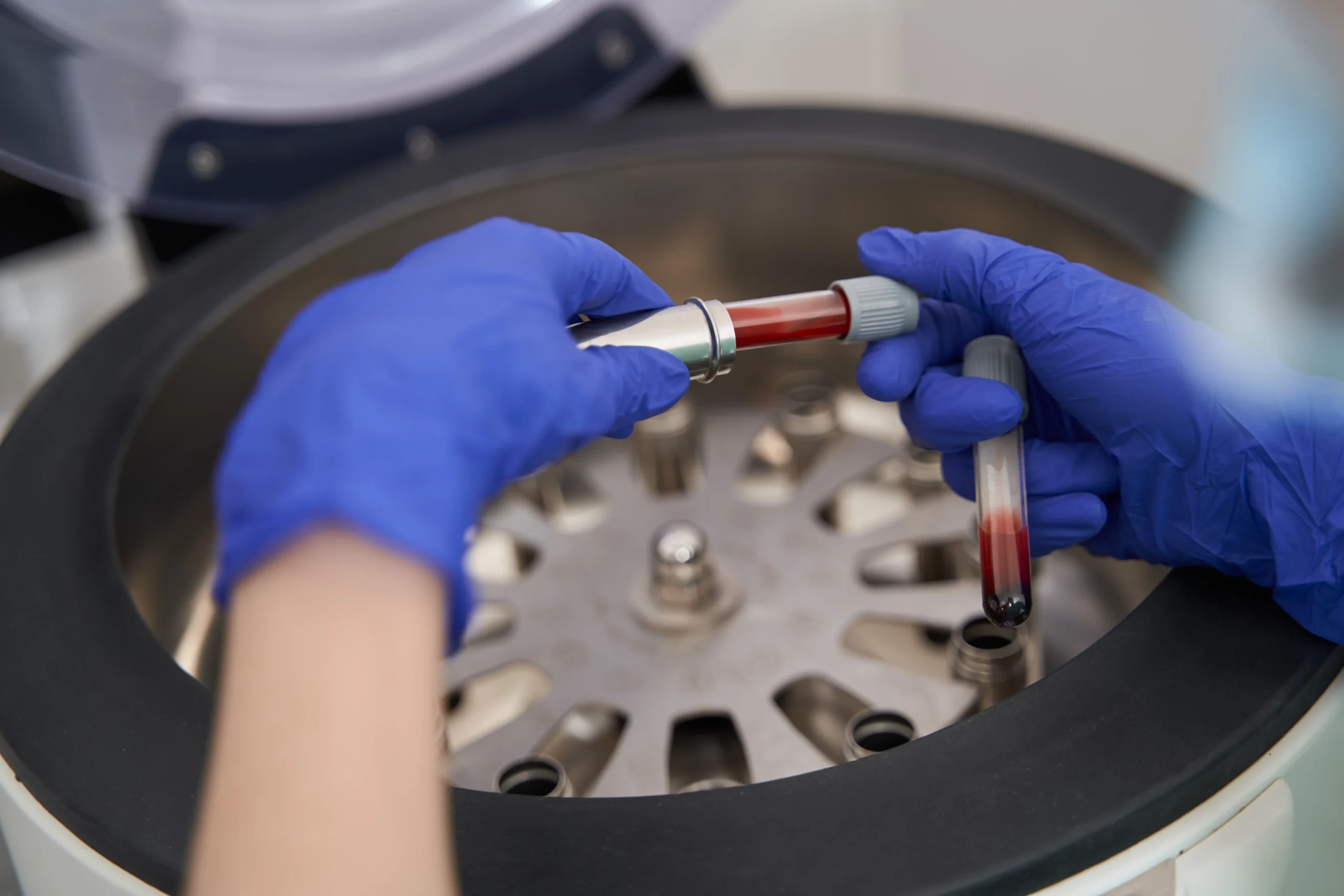
A 20 mL draw contains a fixed number of platelets. No amount of downstream processing increases that total.
How many of those platelets survive centrifugation and separation. Whatever is lost at this stage does not come back.
Do more platelets mean better results? Three dose bands compared
ABOUT THE STUDY
Hooper and colleagues at Emory University published a systematic review and meta-analysis in PM&R in 2026 (PROSPERO registration CRD42022340057), analysing 32 randomised controlled trials in patients with mild to moderate knee osteoarthritis.
The study broke from convention in one key way. Rather than treating all PRP as a single category, it sorted the trials by the total platelets actually delivered. Compared against hyaluronic acid, all three bands showed significant improvement. The size of that improvement was not the same.
p<0.01
p<0.01
p<0.01
Figures are effect sizes (standardised mean difference / SMD), a statistical measure of magnitude. Higher values indicate a clearer effect. All comparisons are against hyaluronic acid.
In other words, the relationship between dose and outcome is not a straight line that keeps rising.
One clarification, to avoid any misreading. The low-dose group did benefit. The improvement was smaller than in the other two bands, which is not the same as no effect.
This study enrolled patients with mild to moderate knee osteoarthritis. The findings do not transfer directly to severe cases.
Judging a PRP protocol takes more than one number. What matters is how the whole plan is built — and that is a conversation for after an examination.
Knee PRP treatment at Ginza YR Clinic

Dr. Junya Higuchi, our director, earned his MD-PhD at the University of Tokyo, where he conducted stem cell research. He is a board-certified orthopaedic surgeon and a certified physician of the Japanese Society for Regenerative Medicine, with over 20,000 patient consultations and more than 1,000 surgical procedures.
In Japan, intra-articular PRP injection falls under the Act on the Safety of Regenerative Medicine. A clinic may provide it only after review by a Certified Committee for Regenerative Medicine and completion of the notification process. We have submitted our provision plans to the Ministry of Health, Labour and Welfare, and they have been accepted.
We hold three PRP provision plans, each covering a different treatment area.
| Plan number | Scope and classification |
|---|---|
| PB3250225 | PRP for chronic arthritis — Class II regenerative medicine The knee treatment described in this article is provided under this plan |
| PC3250241 | PRP for skin regeneration — Class III regenerative medicine |
| PC3250242 | PRP for hair growth — Class III regenerative medicine |
The skin and hair growth plans cover different treatment areas and do not apply to the knee.
Acceptance of a provision plan does not mean the government guarantees or endorses the treatment’s effectiveness.
Fees, treatment details and risks

Knee PRP treatment is self-funded care and not covered by Japanese national health insurance. Fees are as follows.
| Item | Fee (JPY, tax incl.) |
|---|---|
| First consultation | ¥3,300 |
| Follow-up consultation | ¥2,200 |
| Premium PRP Therapy (knee osteoarthritis / meniscus injury, one knee) — single session | ¥264,000 |
| Premium PRP Therapy (knee osteoarthritis / meniscus injury, one knee) — course of 3 | ¥712,800 |
A session takes roughly 90 minutes from blood draw to injection. The physician decides the number of sessions after examination. Reported effects last from around two months to about one year, though duration varies between individuals.
Main risks and side effects
After a PRP injection, you may experience redness, itching, pain, swelling, a sensation of heat, or bruising at the injection site. Because the treatment uses your own blood, the risk of drug-induced allergy is considered relatively low. Infection, inflammatory reaction and worsening pain remain possible.
Results and post-treatment responses vary between individuals. For end-stage knee osteoarthritis, we may recommend options other than PRP.
Consultations and booking
There is no need to wait until walking becomes difficult. The earlier you understand the state of your joint, the more options remain open.
Ginza YR Clinic, Tokyo — by appointment only, self-funded care.
Enquire via WhatsApp (English)
You can also use our online booking system, which is available in Japanese only.
Phone: +81-3-6263-9219
Address: Css Building III 7F, 6-5-13 Ginza, Chuo-ku, Tokyo 104-0061
5 minutes on foot from Ginza Station (Tokyo Metro), Exit C3 or C2
Disclaimer
This article summarises the current state of research on PRP. It does not describe or guarantee outcomes at our clinic. Suitability is determined after examination. Results vary between individuals. Knee PRP treatment is self-funded care and is not covered by Japanese national health insurance.
Reference
Hooper N, Shapiro S, Paidsetty V, et al. Platelet-rich plasma outcomes in knee osteoarthritis are associated with the amount of total deliverable platelets: A systematic review and meta-analysis. PM R. 2026;18(2):210-222. DOI: 10.1002/pmrj.13455