








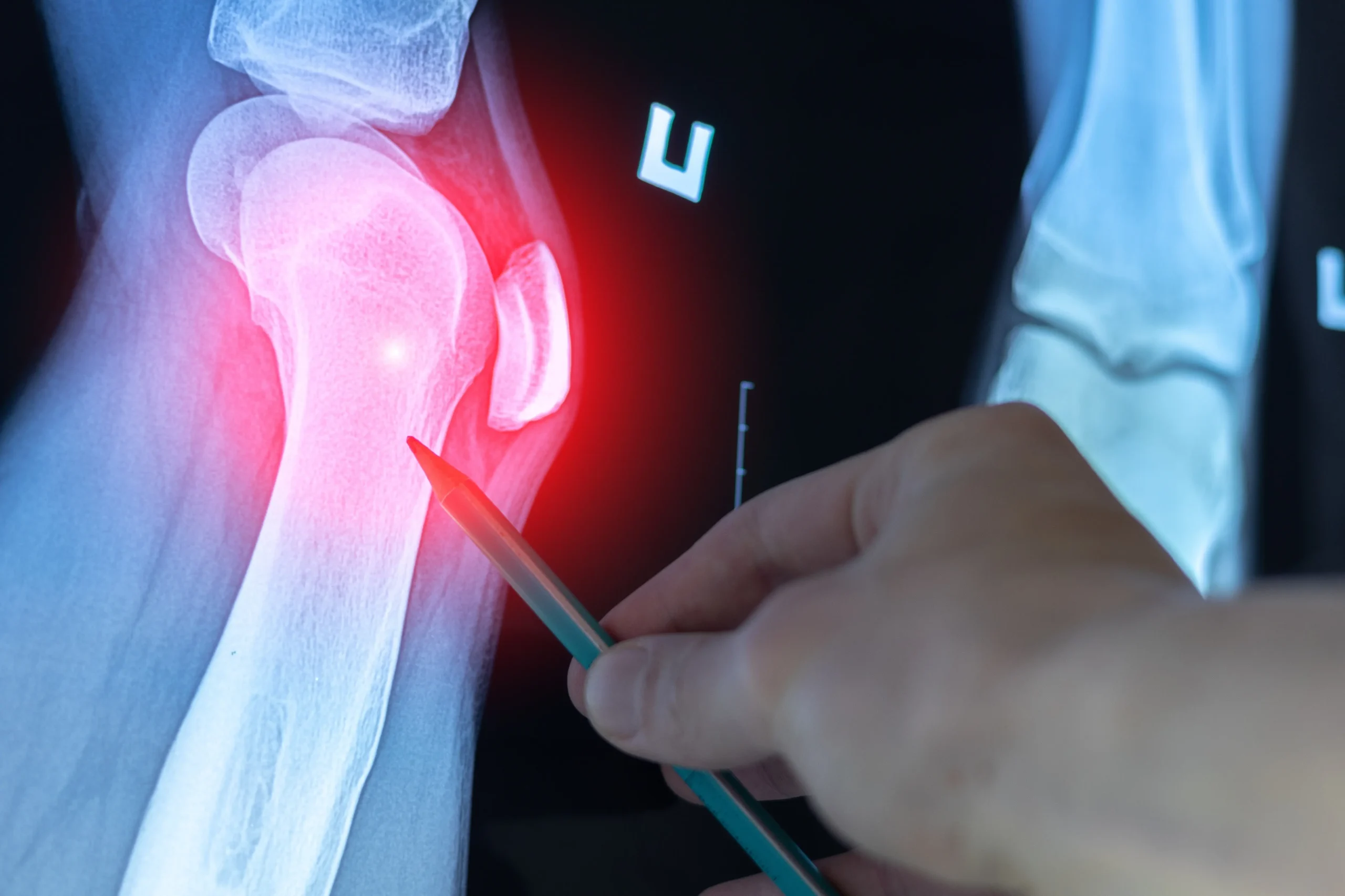
A 2026 analysis pooled data from 2,254 patients to compare PRP containing high levels of leukocytes with PRP from which leukocytes had been removed. The two showed no clear difference in effectiveness. What did differ was how comfortable the first few days after the injection were likely to be.
Two Kinds of PRP: With Leukocytes, or Without
PRP (platelet-rich plasma) is made from the patient’s own blood. We draw a sample, concentrate the components involved in repair using a centrifuge, and inject the result into the knee joint.
Platelets and leukocytes are close in density, so centrifugation alone cannot separate them completely. Some leukocytes remain in the finished PRP and enter the joint alongside the platelets.
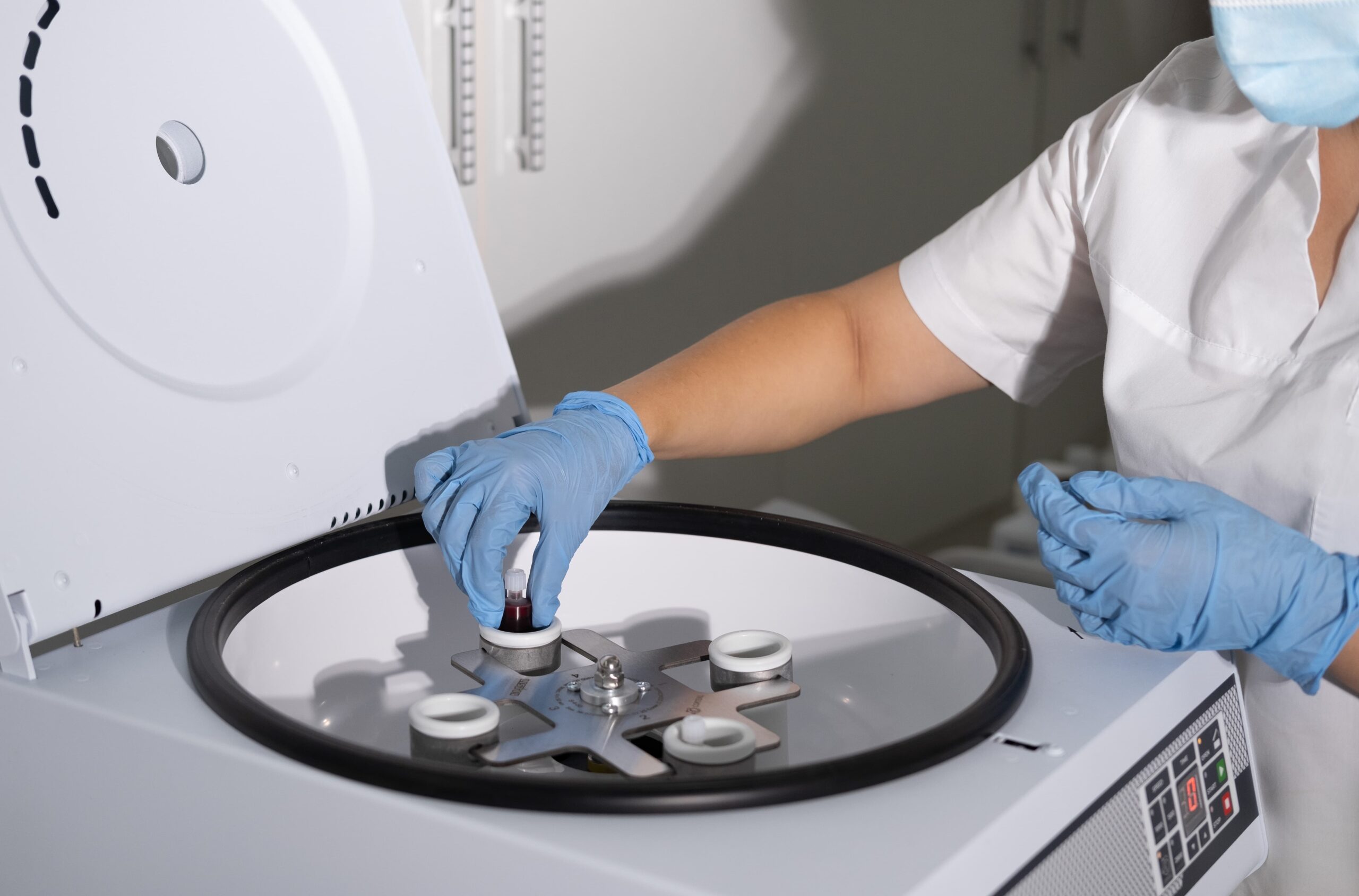
That raises a question. Once inside the joint, do those leukocytes support repair? Or do they intensify inflammation?
Physicians answered this question differently, and their answers shaped how they prepared PRP.
Leukocytes serve a purpose, so leave them in
Leukocytes add to the burden, so remove as many as possible
The result is two types in clinical use: L-PRP, which retains a high leukocyte content, and LP-PRP, from which leukocytes have been largely removed. Both positions rest on real reasoning, which has left patients with no clear basis for choosing between them for more than a decade.
The Case for Keeping Leukocytes
Leukocytes, particularly monocytes and neutrophils, are considered essential to initiating the healing response. Repair begins with inflammation in the first place. Strip out the components involved in inflammation, this argument runs, and the regenerative response that follows may never get going.
The Case for Removing Leukocytes
Leukocytes, and neutrophils in particular, release pro-inflammatory cytokines such as IL-1β and TNF-α, along with enzymes that break down tissue (matrix metalloproteinases, or MMPs). The joint cavity is a narrow, closed space, so these substances may intensify inflammation in the synovium or contribute to post-injection pain. In some cases, they have also been suggested to accelerate cartilage wear.
LP-PRP was designed around a different idea: reduce leukocytes to limit inflammatory risk, let the growth factors released by platelets do the work, and make the experience easier on the patient.
February 2026 Analysis: Leukocyte Content Was Not the Deciding Factor
A network meta-analysis published in February 2026 pooled 21 randomised controlled trials identified through searches up to October 2025, covering 2,254 patients in total. The databases searched were PubMed, Embase, Cochrane CENTRAL and Web of Science, with no language restrictions.
The analysis compared four injections within a single framework:
- L-PRP — PRP with a high leukocyte content
- LP-PRP — PRP with leukocytes largely removed
- Hyaluronic acid — a joint injection widely used in practice
- Saline — a control containing no active ingredient
1. At six months, both types of PRP outperformed saline
Six months after treatment, WOMAC scores were better than the saline group by roughly 15.7 points for L-PRP and 15.3 points for LP-PRP. Both figures exceed the MCID the study had set in advance — the smallest change a patient can actually notice, defined here as 9 to 12 points. Hyaluronic acid also beat saline, but by a smaller margin of about 7.1 points.
| Injection | Difference vs saline |
|---|---|
| L-PRP | Approx. 15.7 points |
| LP-PRP | Approx. 15.3 points |
| Hyaluronic acid | Approx. 7.1 points |
Note: WOMAC is a patient-completed questionnaire covering pain, range of movement and everyday activities in the joints, including the knee. It is a standard measure in knee research.
2. No clear difference emerged between the two types of PRP
On functional scores, the gap between them was 0.45 points (95% confidence interval −6.44 to 5.53). A gap that small can be explained by chance variation, so it does not establish that either type is better.
The paper’s ranking does place LP-PRP above L-PRP. However, the estimated ranges for the two overlap heavily, and the authors state that this ordering cannot support a claim of superiority.
Pain results were much the same. Compared with saline, LP-PRP improved scores by about 11.1 points and L-PRP by about 10.8 points. A direct comparison again found no clear difference.
The authors argue that this calls into question the view that leukocytes are essential to the healing response inside the joint, and that the substances released by platelets are more likely to be doing the work.
PRP With More Leukocytes Drew More Reports of Pain and Swelling
Effectiveness may be similar, but what patients experience afterwards is not. Among those who received L-PRP, localised pain and swelling in the knee were reported more frequently. The likely explanation is that neutrophils in L-PRP release pro-inflammatory substances, temporarily irritating the synovium lining the joint and increasing the production of joint fluid.

One caveat matters here. Trials did not record side effects in a consistent way, which made it impossible to combine the figures. The authors therefore describe this only as an observed tendency. Their conclusion is that the evidence is not sufficient to recommend one type over the other.
This changes what you are actually choosing between. The question is no longer which one works better, but which one fits your schedule over the coming weeks, and which one gets you closer to how you want to feel after treatment.
Five Things Worth Asking Before You Have PRP
-
01
Is the PRP leukocyte-rich, or has the leukocyte content been reduced? -
02
What equipment and method are used to prepare it? Is the concentration measured and recorded? -
03
What pain or swelling might follow the injection, and how is it managed? -
04
What stage is your knee at right now? (This requires imaging.) -
05
When will the result be assessed, and what happens after that?
PRP for the Knee at Ginza YR Clinic

Our director, Dr Junya Higuchi, completed his doctorate at the University of Tokyo Graduate School of Medicine, where he conducted stem cell research. He is a board-certified orthopaedic surgeon, a physician certified by the Japanese Society for Regenerative Medicine, and a sports physician accredited by the Japan Sport Association. He has seen more than 20,000 outpatients and performed over 1,000 operations.
Our knee PRP treatment is provided under the Act on the Safety of Regenerative Medicine. We have submitted a regenerative medicine provision plan to the Ministry of Health, Labour and Welfare, and that plan has been accepted. In Japan, intra-articular PRP injection may only be offered lawfully once this acceptance is in place.
PB3250225
PRP for chronic arthritis · Class II regenerative medicine
Note: Acceptance of a provision plan means the clinic has completed the procedures required by law. It does not mean the government has approved the treatment’s effectiveness.
Any plan for the knee has to account for both the condition of the joint and the rhythm of your daily life. You are welcome to come in before the pain becomes pronounced. That is usually the stage at which the widest range of options is still open.
Cost and Risks
PRP intra-articular injection, one knee: from ¥264,000 per session
First consultation ¥3,300 and follow-up consultation ¥2,200 are charged separately.
Costs vary with the treatment area, options selected and number of sessions. We go through the details at your consultation.
This treatment is private (not covered by insurance). Because it involves an injection, pain, swelling and bruising can occur at the injection site, and infection is possible in rare cases. Results vary between individuals, and not everyone achieves the same outcome. Whether the treatment is suitable is determined through examination and imaging.
Ginza YR Clinic
Ginza, Tokyo — by appointment only, private treatment
Booking: https://airrsv.net/yrclinic/calendar
Tel: +81-3-6263-9219
Disclaimer
Note: This article summarises the current state of research in the field of PRP. It is not a description of results at our clinic. Whether the treatment is suitable is determined through examination.
Note: This article is provided for general medical information. It does not guarantee any particular treatment outcome.
Source
Xu B, Huang X, Su X, Fu Y, Feng S, Zhou Y, Gong L, Yan J. Leukocyte-rich versus leukocyte-poor platelet-rich plasma and hyaluronic acid for knee osteoarthritis: a systematic review and network meta-analysis. J Orthop Surg Res. 2026;21:222.
DOI: 10.1186/s13018-026-06689-4 (published online 2 February 2026, open access, full text free to read)